

Alberta 
Alberta releases new report on nuclear energy future
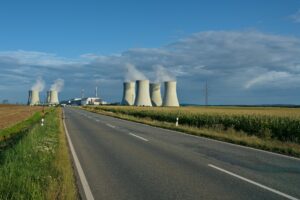 On April 22, the Alberta government released a report from the Nuclear Energy Engagement and Advisory Panel outlining a proposed framework for integrating nuclear power into the province’s energy system. The report is based on extensive consultations with industry experts, Indigenous communities, municipalities, and nearly 6,000 public survey responses. It highlights growing public interest in nuclear energy as a reliable, low-emission power source and emphasizes the need for careful, inclusive planning. Key recommendations include improving public education on nuclear technology, enhancing coordination with federal regulators, and maintaining long-term dialogue with Indigenous and Métis communities regarding project development. The report also positions nuclear energy as an opportunity for economic growth beyond electricity generation, including supply chain development and specialized expertise. The provincial government will now assess the recommendations to determine next steps for implementation.
Source: Meridian Source
Electricity Prices for Alberta
The Alberta power pool price averaged 2.761 cents per kWh in April 2026. This price is 0.602 cents lower than last month’s average of 3.363 cents. The pool price has averaged 4.125 cents per kWh over the last 12 months.
As of May 1, 2026, the forward market was predicting electricity prices for the calendar years of 2026, 2027, 2028, 2029, 2030, and 2031. These prices are 4.041, 4.583, 5.900, 6.401, 6.701, and 7.001 cents per kWh, respectively.
Gas Prices for Alberta
Direct Energy’s gas rate for April 2026 was $1.874 per GJ in Alberta. The May 2026 rate has been set at $0.936 per GJ. Alberta gas prices have averaged $1.848 per GJ over the last 12 months.
As of May 1, 2026, the forward market was predicting gas prices for the calendar years of 2026, 2027, 2028, 2029, and 2030. These prices are 1.64, 2.26, 2.53, 2.63, and 2.59 cents per GJ, respectively.
British Columbia 
North America’s 1st electrochemical lithium refining facility opens in B.C.
A new electrochemical lithium refining facility operated by Mangrove Lithium has opened in Delta, British Columbia, marking the first plant of its kind in North America and a significant step toward strengthening Canada’s critical mineral supply chain. Developed from a concept that began in 2013, the facility uses a more sustainable electrochemical process to convert lithium into battery-grade material, with production expected to begin at commercial scale later this year. The plant has the capacity to supply lithium for approximately 25,000 electric vehicles annually and represents Canada’s effort to reduce reliance on China, which currently dominates global lithium refining. The project comes amid rising global demand for lithium and increasing geopolitical concerns over supply chain security. Experts note that Canada’s limited refining capacity has been a key vulnerability, despite domestic lithium production. The new facility is seen as an important step toward improving national resilience, supporting economic growth, and advancing a domestic battery supply chain. However, challenges remain, including the need for expanded mining capacity and responsible sourcing of raw materials, which can take years to develop and require careful collaboration with Indigenous communities.
Source: CBC
Ontario 
Ontario electricity system to add 14 new solar, wind projects
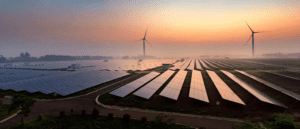 Ontario’s Independent Electricity System Operator (IESO) has awarded long-term electricity generation contracts to 14 new renewable energy projects, including 12 solar and two wind developments. This marks the province’s first major expansion of large-scale renewable energy in over a decade and reflects efforts to prepare for a projected rise in electricity demand of up to 90 per cent by 2050. The initiative signals a renewed focus on long-term energy planning, particularly as Ontario looks to meet growing needs into the 2030s and beyond. The IESO indicated that the newly secured contracts offer competitive pricing, lower than previous averages for similar renewable projects. The move comes after the cancellation of hundreds of renewable contracts in 2018 under Premier Doug Ford’s government, which had criticized earlier agreements as overly costly. In addition to renewables, the IESO is expected to procure additional capacity from natural gas and battery storage projects to ensure reliability during peak demand periods.
Source: City News
Saskatchewan 
Sask. NDP releases plan for energy grid that would reverse government’s doubling down on coal
The Saskatchewan NDP has introduced a 21-page “Grid and Growth Plan” aimed at ensuring reliable, affordable electricity while supporting future economic growth. Based on independent modelling, the plan proposes phasing out coal-fired power plants at the end of their operational life rather than investing an estimated $2.6 billion to refurbish them for extended use. Instead, the NDP strategy emphasizes expanding natural gas generation, increasing wind, solar, and battery storage capacity, and building new high-voltage transmission infrastructure. It also identifies nuclear energy as a long-term option, likely to be deployed in the 2040s, depending on regulatory and workforce readiness. The NDP argues its approach would lower electricity rates, reduce emissions sooner, and generate significant economic activity, while also introducing governance reforms such as an independent regulator and greater transparency in planning. However, the provincial government strongly criticized the proposal, calling it unrealistic and warning it could lead to job losses, reduced grid stability, and higher costs. The debate reflects broader disagreements over how Saskatchewan should balance affordability, energy security, environmental goals, and the future role of coal in its electricity system.
Source: CBC
Manitoba 
MMF and RES Announce Planned Fleury Winds Project
Manitoba’s 2026 provincial budget has drawn strong criticism from environmental organizations, which argue it fails to deliver meaningful progress on climate action despite government promises. Groups such as Canadian Parks and Wilderness Society and Climate Action Team Manitoba gave the budget a near-failing grade, citing insufficient investment in emissions reduction, conservation, and sustainable infrastructure. While the government increased funding for the Environment and Climate Change Department and continued programs like home energy retrofits and electric vehicle rebates, critics say these measures largely maintain existing efforts rather than introduce the transformative investments needed to address worsening climate impacts such as wildfires. The budget does include some positive initiatives, such as plans for free public transit for youth and modest funding for parks and conservation projects. However, environmental groups argue these steps fall short of what is required to meet ambitious climate and biodiversity targets, including protecting 30 per cent of land and water by 2030. They contend that prioritizing tax cuts and fiscal balance over substantial climate investment risks higher long-term environmental and economic costs and call for greater funding in areas like public transit, conservation, and low-carbon industry development.
Source: Manitoba-Metis Federation
New Brunswick 
N.B. ‘on track’ for emissions reductions, despite 2024 spike, minister says
 New Brunswick’s Minister of Environment and Climate Change, Gilles LePage, maintains that the province is on track to meet its 2030 greenhouse gas emissions target of 10.7 million tonnes, despite a significant 11.4% increase in emissions in 2024. Emissions rose to 12.8 million tonnes, largely due to increased fossil-fuel electricity generation during an extended shutdown of the Point Lepreau Nuclear Generating Station. LePage characterized the spike as a temporary anomaly and expressed confidence that emissions will decline once the facility resumes normal operations. However, concerns have been raised by experts such as Moe Qureshi, who warned that new industrial projects—including a proposed natural gas plant tied to a data centre—could drive emissions higher in the future. While provincial initiatives, including carbon-pricing-funded projects, are expected to reduce emissions over time, critics argue these measures may not offset new sources. The province continues to develop policy responses, including updates to its climate action plan, but the situation highlights ongoing uncertainty and the need to balance economic development with emissions reduction goals.
Source: CBC
Prince Edward Island 
P.E.I. government’s latest budget signals less focus on climate action, energy savings: expert
Prince Edward Island’s latest operating budget, introduced by Finance Minister Jill Burridge, reflects a reduced emphasis on climate action and energy efficiency programs amid a projected $410-million deficit. Cost-cutting measures include ending the widely used free heat pump program and pausing several green incentives, such as electric vehicle rebates and solar energy programs. While previously approved applicants can proceed, no new applications are being accepted. The reductions come as the province grapples with fiscal pressures and makes what the government describes as “difficult decisions.” Experts, including Brendan Haley of Efficiency Canada, warn that these changes signal a shift away from policies that help residents lower energy costs and emissions. However, some supports remain, including home insulation rebates, which are seen as effective in reducing energy demand. Haley suggested the province may need to adopt alternative strategies, such as stricter building efficiency standards or increased involvement from utilities like Maritime Electric, to maintain progress on energy savings and climate goals.
Source: CBC
Québec 
Hydro-Québec announces new program to accelerate solar energy projects
 Hydro-Québec has introduced a new grant program to encourage residential and business customers to install solar panels, offering $1,000 per kilowatt installed and covering up to 40% of eligible project costs. This initiative is expected to significantly reduce the payback period for solar installations—from 25–30 years down to approximately 10–12 years—making self-generation more financially viable. The program supports the utility’s broader goal of integrating 3,000 MW of solar power into Quebec’s grid by 2035 in response to growing electricity demand. Residential applicants can access funding through the LogiVert Efficient Homes Program for systems installed after June 2025, while businesses must apply via the Efficient Solutions Program for projects initiated after March 2026. Participants may also enroll in net metering, allowing them to feed excess electricity back into the grid in exchange for energy credits. Expanded capacity limits and strict technical and safety requirements are part of the program, ensuring high-quality installations while promoting wider adoption of renewable energy.
Source: Environment Journal
Newfoundland and Labrador 
N.L. government approves emissions hikes for Cenovus oil field project, Vale nickel mine
The Newfoundland and Labrador government has approved higher greenhouse gas emission limits for industrial operations, including the Cenovus Energy-owned White Rose oil field and the Voisey’s Bay nickel mine operated by Vale Base Metals. The West White Rose offshore expansion is expected to raise emissions by approximately 21% at peak production—about 100,000 tonnes of CO₂ annually—while emissions at the Voisey’s Bay mine have more than doubled since 2016 due to a transition to underground mining. These changes were approved through updated baseline emission limits, which are used to determine required reductions under provincial regulations. While the projects are credited with economic benefits such as job creation and extended resource development, experts warn that rising emissions could undermine climate goals. Critics, including climate researchers, argue that increasing emission thresholds reflects declining public and political focus on climate change, despite growing environmental risks. The province maintains that both projects will still be subject to emissions reduction requirements over time, though concerns remain about balancing economic development with long-term climate commitments.
Source: The Globe and Mail
Nova Scotia 
Stronger Air Quality Regulations Effective June 1
 The Nova Scotia government, led by Environment and Climate Change Minister Timothy Halman, has announced significant updates to its Air Quality Regulations, increasing the number of regulated pollutants from six to 26—the first major revision since 1995. The changes impose stricter limits on emissions from industrial sources such as manufacturing plants, power stations, mines, and quarries, with the goal of improving public health and environmental protection. The updated rules, effective June 1, are designed to reduce harmful pollutants linked to conditions like asthma and cancer, while also providing clearer compliance guidelines for industry. The regulations form part of Nova Scotia’s broader climate strategy under the Environmental Goals and Climate Change Reduction Act, aligning with national standards and international guidelines. Officials state the measures will support cleaner industrial practices, reduce healthcare burdens, and contribute to lower greenhouse gas emissions. The province also reports strong progress on climate goals, ranking first in Canada for emissions reductions in 2024 and remaining on track to cut emissions to 53% below 2005 levels by 2030, supported by ongoing investments in renewable energy and clean power initiatives.
Source: Nova Scotia
Nunavut 
Ottawa ‘proud to support’ Iqaluit hydroelectric project: finance minister
In the federal government’s spring economic update, Finance Minister François-Philippe Champagne highlighted limited but notable references to northern development, including support for the proposed Iqaluit Nukkiksautiit Hydroelectric Project. The Inuit-owned initiative aims to reduce reliance on diesel in Iqaluit and promote local energy sovereignty. The project, along with the Grays Bay Road and Port development, has been referred to the federal Major Projects Office for expedited review and approval, signaling federal interest in advancing key infrastructure in Nunavut. The update also focused broadly on national priorities such as increased defence spending, housing expansion, and investment in large-scale infrastructure. A new initiative, Team Canada Strong, was introduced to recruit and train up to 100,000 skilled trades workers across the country. Despite economic challenges, including trade pressures, Champagne expressed optimism about Canada’s economic outlook, emphasizing continued growth and nation-building efforts.
Source: Nunatsiaq News
Northwest Territories 
The Final Report For 2026-2036 Climate Action Plan
The City of Yellowknife has released its Climate Action Plan 2026–2036, a 10-year strategy aimed at reducing greenhouse gas emissions and strengthening community resilience to climate change. The plan responds to growing social, economic, and environmental impacts already being experienced in Yellowknife and outlines a collaborative approach involving residents, stakeholders, and Indigenous partners. In addition to emissions reductions, the plan is expected to deliver co-benefits such as improved energy security, cost savings, better public health, and stronger community connections. The strategy is organized around six core themes: sustainable transportation, waste management, efficient buildings and infrastructure, land-use planning, governance, and emergency preparedness. Approved by city council in February 2026, the plan emphasizes long-term implementation through coordinated efforts across municipal departments and partnerships with the Government of the Northwest Territories and Indigenous governments. Ongoing public engagement and regular progress updates are expected to support effective execution over the next decade.
Source: City of Yellowknife
Yukon 
Could nuclear power solve the Yukon’s energy problem?
The Government of Yukon, led by Energy Minister Ted Laking, has signed an agreement with Ontario to explore the potential use of small modular reactors (SMRs) as a long-term solution to the territory’s growing energy needs. The initiative is intended to address increasing electricity demand and reduce reliance on diesel generation, which has recently been used to stabilize the grid. SMRs are compact nuclear systems capable of producing significant power and are being developed in Canada, with Ontario positioning itself as a leader in the technology. The agreement will focus on regulatory development, technical planning, and knowledge sharing, drawing on Ontario’s experience with SMR development at projects such as the Darlington Nuclear Generating Station. While proponents highlight benefits such as reliable, low-emission power suitable for northern conditions, experts remain divided over feasibility due to concerns about permafrost stability and seismic risks in the Yukon. The agreement marks an early step in evaluating whether SMRs could form part of the territory’s future energy system, with further study and public consultation expected before any deployment decisions are made.
Source: CBC