

Alberta 
ERA Invests Nearly $51 Million in Alberta Innovation to Cut Emissions and Grow the Economy
 Emissions Reduction Alberta (ERA) is investing nearly $51 million from Alberta’s industry-funded TIER program into 16 projects worth almost $180 million. The projects span industries including oil and gas, agriculture, manufacturing, transportation, electricity, critical minerals, chemicals, and pulp and paper, with locations across Alberta. The technologies focus on areas such as carbon capture, hydrogen, methane reduction, advanced materials, resource efficiency, and nuclear fuel, with the goal of reducing emissions while strengthening Alberta’s economy and supporting commercialization of locally developed technologies. If successful, the projects are expected to reduce approximately 117,700 tonnes of CO₂-equivalent emissions by 2030, create 1,556 person-years of employment, and contribute roughly $250 million to Alberta’s GDP. Major initiatives include low-carbon asphalt production, hydrogen refueling, lithium refining, used-oil recycling, power-line robotics, methane monitoring, carbon capture at a pulp mill, low-emission hydrogen production, and advanced cellulose materials. Overall, the investment is intended to accelerate clean-technology development, create jobs, strengthen supply chains, and improve Alberta companies’ competitiveness while delivering measurable environmental benefits.
Source: Emissions Reduction Alberta
Electricity Prices for Alberta
The Alberta power pool price averaged 4.571 cents per kWh in August 2026. This price is 1.445 cents higher than last month’s average of 3.126 cents. The pool price has averaged 3.859 cents per kWh over the last 12 months.
As of September 1, 2026, the forward market was predicting electricity prices for the calendar years of 2026, 2027, 2028, 2029, 2030, and 2031. These prices are 3.938, 4.069, 5.581, 7.147, 7.822, and 8.072 cents per kWh, respectively.
Gas Prices for Alberta
Direct Energy’s gas rate for August 2026 was $1.729 per GJ in Alberta. The September 2026 rate has been set at $1.124 per GJ. Alberta gas prices have averaged $2.022 per GJ over the last 12 months.
As of September 1, 2026, the forward market was predicting gas prices for the calendar years of 2026, 2027, 2028, 2029, and 2030. These prices are 1.47, 1.94, 2.42, 2.46, and 2.48 cents per GJ, respectively.
British Columbia 
B.C. committed to clean energy — but the government just bought a natural gas plant
B.C.’s growing electricity demand is forcing the province to rely on natural gas even as it struggles to meet its climate targets. BC Hydro’s purchase of the 275-megawatt Island Generation gas plant is intended to provide backup power as demand rises, driven by LNG and mining projects, electric vehicles, heat pumps and broader electrification. Although the plant operates only a few days a year and represents a small share of BC Hydro’s generation, climate and energy experts describe its purchase as an “unfortunate necessity” that exposes shortcomings in the province’s long-term electricity planning. The broader concern is that B.C.’s push for energy-intensive LNG and resource development could undermine its emissions-reduction goals and increase energy costs. The province is already projected to achieve only about half of its legislated 2030 emissions target, while some climate policies have been weakened or abandoned. Experts argue that B.C. should have planned earlier for rising electricity demand and invested more aggressively in renewable generation and infrastructure rather than expanding reliance on gas. With increasingly severe wildfires highlighting the impacts of climate change, the article calls for more proactive action on both climate adaptation and emissions reduction, warning that continued fossil-fuel development could make those challenges—and future affordability pressures—worse.
Source: The Narwhal
Ontario 
Canada invests in renewable natural gas production in Ontario
The Government of Canada is investing nearly $19 million through Natural Resources Canada’s Clean Fuels Fund to help StormFisher Environmental, a subsidiary of Generate Upcycle, expand its London, Ontario, anaerobic digestion facility. The London Digester is Canada’s largest food-waste anaerobic digestion facility producing renewable natural gas (RNG) from municipal and commercial food waste. The expansion will increase RNG production by 450,000 gigajoules annually and generate an additional 86,000 tonnes of organic fertilizer each year, turning waste into low-carbon energy and agricultural inputs while reducing landfill waste and emissions. The project is part of the federal government’s broader strategy to expand domestic clean-fuel production, strengthen energy security and support Canada’s transition toward net-zero emissions by 2050. Following a $70-million expansion, the facility is expected to produce 675,000 GJ of RNG annually, enough additional energy to power roughly 4,500 homes per year. Government and company officials highlight the project as an example of public-private investment supporting local jobs, emissions reductions, circular-economy development and a more competitive Canadian clean-energy sector.
Source: Government of Canada
Saskatchewan 
Cenovus says DilSAP project could add 10,000 barrels a day at Spruce Lake
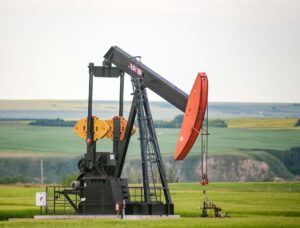 Cenovus Energy is proceeding with its Spruce Lake Diluent Solvent-Aided Process (DilSAP) project in northwestern Saskatchewan, marking the company’s first commercial use of the technology. The project combines steam with a light hydrocarbon solvent to improve heavy-oil recovery and is expected to increase production by approximately 10,000 barrels per day while reducing greenhouse-gas emissions intensity by about 30% per barrel. Construction is expected to begin later this year, with the new diluent recovery and injection facility scheduled to begin operating in late 2027. The project is also expected to improve efficiency by reducing steam and water requirements, lower operating costs, and make better use of existing well pads. Cenovus estimates the construction phase could employ up to 200 workers and create four permanent jobs, while increasing municipal tax revenue. The company says environmental safeguards will include air, groundwater and surface-water monitoring, along with well-casing measures designed to protect freshwater aquifers. Overall, Cenovus presents DilSAP as a way to increase heavy-oil production while lowering emissions intensity and improving resource efficiency.
Source: Sask Today
Manitoba 
Hydro’s planned $3B gas turbines purchase misguided, bad for environment, critics say
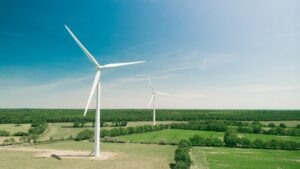 Manitoba Hydro is defending its planned $3-billion investment in three new 250-megawatt gas turbines in Brandon as a reliable way to meet rising electricity demand, particularly during prolonged cold snaps. However, the utility acknowledged that its existing Brandon gas turbines had reduced output during three of Manitoba’s 10 highest-demand periods over the past five winters, including one outage during the province’s second-highest peak load ever. Hydro attributed the problems to maintenance, staffing and years of underinvestment after the plant was expected to be decommissioned, while maintaining that the new turbines will be more reliable. The utility projects a firm capacity shortfall of up to 600 MW by 2030 and plans to address it through new gas turbines, Indigenous-led wind projects, energy efficiency and electricity imports. Environmental groups argue that the outages undermine Hydro’s central claim that natural gas is the most dependable solution during extreme weather. They warn that gas-plant failures could leave Manitoba dependent on expensive imports or facing power shortages and are calling for alternatives such as battery storage and other clean-energy resources to be reconsidered. The ongoing Public Utilities Board review is therefore raising a broader question about whether Manitoba’s long-term power strategy should continue relying heavily on gas, especially as climate change increases risks from extreme weather while the province is already experiencing flooding, wildfires and smoke.
Source: Winnipeg Free Press
New Brunswick 
New Brunswick to review lifting natural gas moratorium
New Brunswick is beginning a five-month public review of its decade-old moratorium on natural gas development and hydraulic fracking, potentially opening the door to renewed gas exploration. Premier Susan Holt said changing economic conditions, rising energy demand, cost-of-living pressures and U.S. tariffs have made it necessary to reconsider domestic resource opportunities. The government says advances in science and technology since the 2014 moratorium could allow gas development to be evaluated under stronger environmental standards, but officials emphasized that the review is not an immediate approval for drilling and that there are currently no private-sector projects ready to proceed. The review will examine environmental and health risks, infrastructure needs, financial considerations and, importantly, consultation with First Nations communities. The original 2014 moratorium required conditions such as public acceptance, credible information on environmental and health impacts, wastewater infrastructure, Indigenous consultation and a financial plan before fracking could resume. Holt acknowledged that previous consultation with Indigenous communities was inadequate and said the government intends to take a more inclusive approach this time. The review’s findings are expected in January 2027, with the government promising monthly progress updates.
Source: Global News
Prince Edward Island 
Old Dutch achieves fossil fuel-free operations at P.E.I. facility
Old Dutch Foods has opened an 8,400-square-foot facility in Slemon Park, Prince Edward Island, designed to operate without carbon dioxide emissions from its operations. The building uses a combination of on-site solar power, geothermal heating and cooling, and energy-recovery ventilation to reduce energy consumption. Its solar array is expected to generate about 40 kilowatts, while 16 underground boreholes provide the primary heating and cooling through a closed-loop geoexchange system. Together, these technologies eliminated the need for a natural-gas heating system. The facility is intended as a first step in Old Dutch Foods’ broader sustainability strategy, with the company planning to explore similar technologies at other sites. Beyond reducing emissions, the company expects the building to lower operating costs, potentially saving up to $50,000 annually in utilities, while also benefiting from refundable tax credits. Old Dutch is also pursuing wider environmental initiatives such as reducing food and packaging waste, recovering wastewater, reusing oils and chemicals, improving energy efficiency and recycling materials.
Source: Sustainable Biz Canada
Québec 
Quebec environmental groups, municipalities lay out climate priorities ahead of election campaign kickoff
Quebec environmental organizations and experts outlined the key environmental priorities they want political parties to address in the upcoming provincial election. A major focus is water: stakeholders are calling for billions of dollars in investment to repair aging water infrastructure, better tracking of water use, expanded rainwater collection, and greater use of natural infrastructure such as wetlands, urban forests and green drainage systems to reduce flooding. They also want to preserve public access to lakes and rivers and ban the use of lakes for mining-waste disposal. The groups argue that climate change is increasing pressure on already vulnerable water systems and that Quebec needs stronger protection of its water resources. On climate and energy, stakeholders are urging Quebec to make greater use of its clean hydroelectricity to replace imported oil and gas, while accelerating energy efficiency, transportation electrification and public transit. The Quebec Center for Environmental Law is also calling for a legally binding climate law with sector-specific carbon budgets, stronger climate oversight and mandatory climate assessments for government decisions. Other priorities include improving transparency through a public environmental registry, strengthening endangered-species protections, modernizing forestry rules, protecting natural habitats and reinforcing public consultation. Overall, the groups argue that Quebec should reverse recent environmental policy rollbacks and adopt a more coordinated, legally enforceable approach to climate and environmental protection.
Source: City News Montreal
Newfoundland and Labrador 
A New Chapter for Newfoundland and Labrador’s Electricity System
Newfoundland and Labrador, Quebec, and the federal government have signed a 50-year electricity cooperation agreement that would replace the controversial 1969 Churchill Falls contract starting in 2027. The deal would significantly increase the value Newfoundland and Labrador receives for Churchill Falls power, with rates rising from 1.8¢/kWh in 2027 to about 11.5¢ by 2041, averaging roughly 7.4¢ over the agreement. It also includes plans to refurbish and expand Churchill Falls from 5,428 MW to about 6,700 MW, develop the 2,700-MW Gull Island project by 2036–37, study 2,000 MW of Labrador wind generation, and expand transmission infrastructure. Newfoundland and Labrador could gain an estimated $49 billion in net present value, supported by approximately $10 billion in federal funding and investment. The agreement could also transform the region’s electricity and economic landscape by giving Newfoundland and Labrador greater access to electricity markets in New York, New England and Ontario, while supporting mining and critical-mineral development in Labrador. However, several uncertainties remain, including whether all proposed generation projects will proceed, how future droughts could affect hydroelectric output, and whether Quebec’s next government will honour the agreement following its October 2026 election. Newfoundland and Labrador’s legislature will debate the deal in September, without the referendum Premier Wakeham had previously promised. The parties aim to finalize financing, regulatory, construction and Indigenous agreements by the end of 2026.
Source: Energy Now
Nova Scotia 
Funding to Help Reduce Greenhouse Gas Emissions From Landfills
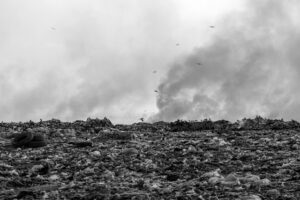 The Nova Scotia government is partnering with St. Francis Xavier University on a $242,060 methane-recovery feasibility study aimed at reducing emissions from the province’s largest landfills. Researchers will measure methane emissions, identify opportunities to capture the gas before it reaches the atmosphere, and assess recovery technologies already being used elsewhere in Canada and around the world. Because methane is a particularly potent greenhouse gas, capturing it could both reduce climate impacts and create a source of renewable energy. Funded through Nova Scotia’s Sustainable Communities Challenge Fund, the project is intended to give municipalities practical information and tools for deciding how to manage landfill methane. The study supports the province’s targets of cutting greenhouse-gas emissions by at least 53% below 2005 levels by 2030 and reaching net zero by 2050. Officials and researchers say the initiative demonstrates how partnerships with universities can turn climate research into practical solutions for communities while supporting renewable energy and improved waste management.
Source: Global Renewable News
Nunavut 
Five clean energy projects across Nunavut get federal funding
The federal government is providing $3 million for five clean-energy projects in Nunavut as part of its National Electricity Strategy, which aims to expand Canada’s electricity grid and increase access to reliable, affordable and clean power. Projects include solar installations in Resolute Bay and Chesterfield Inlet, engineering work for a hybrid renewable-energy system in Arviat, carbon analysis for a new cultural research campus in Cambridge Bay, and a $1.4-million renewable-energy initiative by Nunasi Corp. serving Baker Lake, Whale Cove and Chesterfield Inlet. Most of the funding comes through Natural Resources Canada’s Clean Energy for Rural and Remote Communities Program, which seeks to reduce northern communities’ dependence on diesel and other fossil fuels. The investments support solar power, renewable-energy technology and cleaner infrastructure while advancing the federal government’s broader goal of doubling Canada’s electricity-grid capacity by 2050 and expanding clean electricity across the country, including remote and northern communities.
Source: Nunatsiaq News
Northwest Territories 
Proposed changes to NWT solar policy leave some concerned
The Northwest Territories is considering replacing its current net metering system for rooftop solar with net billing, which would compensate customers for excess electricity at a lower rate than the retail price. The proposed changes are intended to address concerns that net metering shifts grid infrastructure costs onto customers without solar, with the territorial government estimating that the program could cost utilities $1.5–$2.4 million annually by 2030 under existing rules. However, solar homeowners such as Yellowknife resident Norah McNaughton argue the changes could undermine the economics of systems they financed under the previous rules, particularly by eliminating the ability to carry summer-generated credits into the winter. The proposal is also raising concerns among solar installers, who say lower compensation could discourage new installations and hurt a growing clean-energy industry in the North. Utilities argue that compensation should better reflect the actual value of solar to the grid, particularly in hydro-powered areas such as Yellowknife where solar displaces relatively inexpensive generation. The government says it recognizes that existing customers invested under the old rules and has directed regulators to consider a transition or grandfathering period. The Public Utilities Board is expected to continue reviewing the proposal, with a public hearing scheduled for June 2027.
Source: Cabin Radio
Yukon 
Yukon Conservation Society wants to bring ‘guerrilla solar’ movement north
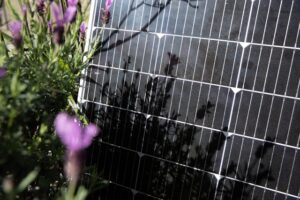 Amid a 34% electricity rate increase in Yukon, the Yukon Conservation Society is encouraging residents to consider plug-in solar as a way to reduce energy costs and increase household energy independence. However, plug-in solar systems remain illegal in Canada because they lack formal electrical standards, and Yukon halted permits for residential solar connections in 2023 after rapid fluctuations in solar generation created challenges for the territory’s small grid. Critics of the current approach argue Yukon Energy should modernize the grid to accommodate more distributed renewable energy, while officials and engineers warn that uncertified plug-in systems could pose fire and electrical-safety risks. The debate comes as Yukon Energy develops a grid-scale battery project, which could help manage the variability of solar power and potentially enable more residential installations. Meanwhile, plug-in or “balcony” solar has gained traction internationally, particularly in Germany, and has recently been legalized in several U.S. states, including Utah. Canadian advocates argue the technology could make solar more accessible to renters, apartment dwellers and lower-income households, but emphasize that Canada needs properly regulated and certified systems rather than informal installations.
Source: CBC