Alberta 
O’Leary’s Gas-Powered Data Centre Emissions Could Wipe Out Alberta’s Coal Phaseout Gains
A proposed $70-billion “Wonder Valley” data centre backed by investor Kevin O’Leary could significantly increase Alberta’s greenhouse gas emissions and water use if built as planned. According to estimates by the Pembina Institute cited by The Energy Mix, the gas-powered facility—designed to run on up to 7.5 gigawatts of natural gas—could emit between 25.7 and 30.5 megatonnes of CO₂ annually at full build-out, comparable to emissions from Alberta’s former coal-fired electricity system. Even the first phase alone could make the project one of the province’s largest industrial emitters. While carbon capture and storage has been proposed, it would not necessarily be operational at startup and would still leave substantial residual emissions. The project would also require an estimated 112 to 195 billion litres of water per year for cooling and power generation, raising concerns in a region already experiencing drought conditions. Local and Indigenous consultation has emerged as a major issue, with the Sturgeon Lake Cree Nation stating it was not meaningfully consulted before water licences were issued, prompting a formal appeal. Critics further question Alberta’s gas-focused data centre strategy, noting that many jurisdictions are pairing data centres with renewable energy due to lower costs and faster deployment. Experts argue that Alberta’s regulatory barriers to wind and solar, combined with policies that favour self-supplied power, may be steering large projects toward higher-emission gas generation despite cleaner alternatives.
Source: The Energy Mix
Electricity Prices for Alberta
The Alberta power pool price averaged 3.900 cents per kWh in December 2025. This price is 1.872 cents lower than last month’s average of 5.772 cents. The pool price has averaged 4.387 cents per kWh over the last 12 months.
As of January 1, 2026, the forward market was predicting electricity prices for the calendar years of 2026, 2027, 2028, 2029, 2030, and 2031. These prices are 5.034, 5.821, 7.321, 7.696, 7.996, and 7.996 cents per kWh, respectively.
Gas Prices for Alberta
Direct Energy’s gas rate for December 2025 was $3.390 per GJ in Alberta. The January 2026 rate has been set at $3.270 per GJ. Alberta gas prices have averaged $2.025 per GJ over the last 12 months.
As of January 1, 2026, the forward market was predicting gas prices for the calendar years of 2026, 2027, 2028, and 2029. These prices are 2.96, 2.98, 2.94, and 2.98 cents per GJ respectively.
British Columbia 
Province pledges additional $35 million for clean energy fund
 The British Columbia Ministry of Energy and Climate Solutions has announced an additional $35 million investment in the CleanBC Industry Fund to support industry-led clean energy and emissions-reduction projects. The funding is intended to advance cleaner energy development over the next decade while improving the province’s economic resilience and self-sufficiency, particularly in the context of U.S. trade tariffs. Priority areas for new projects include electrification of oil and gas operations, carbon capture at industrial facilities, and improvements in energy efficiency across major industries. Since its launch six years ago, the CleanBC Industry Fund has allocated more than $368 million to 173 projects, which are projected to cut over 14 million tonnes of greenhouse gas emissions over 10 years. Provincial officials state that the latest funding round will open to eligible companies later this year through dedicated feasibility and innovation streams. The government emphasizes that the fund is a key tool for helping large industrial operators remain competitive in global markets that increasingly demand lower-carbon products, with supported projects expected to significantly reduce emissions from heavy-duty vehicles and other industrial sources.
Source: City News Vancouver
Ontario 
Ottawa gives Ford free pass to fast-track major projects with limited federal oversight
The federal government and the Province of Ontario have signed a new “one project, one agreement, one decision” arrangement that transfers primary authority for environmental assessments of major projects to Ontario, including proposed mining developments in the Ring of Fire region. Under the agreement, projects that previously required both federal and provincial reviews will now be assessed solely through Ontario’s environmental assessment process, with federal involvement limited to advisory support. Prime Minister Mark Carney and Premier Doug Ford described the deal as a way to eliminate regulatory duplication and accelerate nation-building projects, arguing it will allow infrastructure and resource developments to proceed more quickly while maintaining standards. Environmental law experts, First Nations, and advocacy groups strongly criticize the agreement, warning it weakens environmental protections, reduces public transparency, and sidelines federal and Indigenous oversight. Critics argue Ontario’s assessment system is less rigorous, particularly in evaluating climate impacts, cumulative effects, species at risk, and long-term environmental risks. Concerns have also been raised about inadequate consultation with First Nations, many of whom oppose fast-tracked development in the Ring of Fire and are pursuing legal challenges. Opponents say the rapid finalization of the agreement, shortly after the close of public consultation, suggests public input was not meaningfully considered, while supporters, including the mining industry, contend the change will reduce delays and improve Canada’s economic competitiveness.
Source: Canada’s National Observer
Saskatchewan 
Foremost Clean Energy Announces Upcoming Ground-Based Gravity Survey at its Hatchet Lake Uranium Project, Athabasca Basin, Saskatchewan
Foremost Clean Energy Ltd. has announced that it will begin a ground-based gravity survey in December at its Hatchet Lake Uranium Property in northern Saskatchewan’s eastern Athabasca Basin. The survey will focus on the southern extension of the Richardson Trend, an area with limited historical drilling. Conducted by MWH Geo Survey, the program will collect data from approximately 788 gravity stations to better define subsurface structures and density contrasts associated with uranium mineralization. The results will be integrated with existing electromagnetic, magnetic, and geochemical data to refine Foremost’s geological model. The Richardson Trend is a well-known structural corridor that hosts uranium mineralization and contains more than six kilometres of under-tested strike length on the Hatchet Lake property. Historic drilling by Denison Mines returned uranium-bearing intersections, indicating a fertile mineralizing system. Foremost expects the gravity survey to identify priority targets linked to hydrothermal alteration and fault-controlled fluid pathways, which will directly inform a planned, data-driven drill program scheduled to begin in early 2026.
Source: Foremost Clean Energy
Manitoba 
A big bold plan to suck carbon dioxide out of the air — and the rural community at the centre of it
Since October, rural municipalities in southwestern Manitoba—particularly Pipestone and Two Borders—have become the focus of attention following a proposal by Montreal-based startup Deep Sky to build North America’s largest commercial direct air carbon capture (DAC) facility. The project would involve capturing carbon dioxide directly from the atmosphere using large-scale machinery and permanently storing it in deep underground rock formations. Deep Sky promotes the initiative as a major climate solution and economic opportunity, projecting up to $500 million in regional investment, hundreds of construction jobs, and up to 100 permanent positions. The company cites Manitoba’s suitable geology, low-emission hydroelectric grid, and skilled energy workforce as key reasons for selecting the region and plans to finance the project primarily through private investment, carbon credit sales, and federal tax incentives. However, the proposal has generated significant public concern and debate.
Community members have raised questions about environmental risks, long-term liability, energy consumption, land and water impacts, and the effect on rural lifestyles and property values. Experts note that direct air capture remains an emerging and unproven technology at scale, with high costs, heavy energy demands, and a limited track record globally. Critics argue that the electricity required could compete with other decarbonization priorities, while supporters—including provincial leaders—view the project as part of a broader mix of tools needed to reach net-zero targets. As of now, the project remains in the planning and regulatory approval stage, with further environmental review, consultation, and policy decisions required before construction—targeted for late 2026—can begin.
Source: The Narwhal
New Brunswick 
New Brunswick and Canada sign co-operation agreement on environmental and impact assessment
 The Governments of Canada and New Brunswick signed a Co-operation Agreement on Environmental and Impact Assessment, establishing a “one project, one review” framework for major projects requiring both federal and provincial assessments. The agreement aims to streamline processes, reduce duplication, and create a predictable, efficient system while maintaining robust environmental standards. Under the agreement, Canada will rely on New Brunswick’s existing assessment processes where appropriate, utilize joint review panels when necessary, and share expertise and best practices. The initiative also emphasizes meaningful consultation with Indigenous Peoples and coordinated communication, permitting, and information sharing. The governments expect the streamlined process to support timely completion of assessments, ideally within two years, and catalyze investment and job creation in the province. Provincial and federal leaders highlighted that the agreement balances efficiency with environmental integrity. New Brunswick Premier Susan Holt noted that the province’s evidence-based assessment process will remain strong, while Minister Gilles LePage emphasized its science-driven, expert-guided approach. Federal ministers Dominic LeBlanc and Julie Dabrusin stressed the agreement’s role in fostering sustainable development, supporting economic growth, and upholding Indigenous consultation obligations. This marks the second such cooperation agreement under the Impact Assessment Act, following a similar 2019 agreement with British Columbia, and represents a step toward the federal government’s goal of implementing these agreements across interested provinces.
Source: Cision
Prince Edward Island 
What to know about Maritime Electric’s new smart meters
Prince Edward Island (PEI) has unveiled a comprehensive 10-year energy strategy aimed at expanding on-island renewable power generation, modernizing the electricity grid, improving affordability, and achieving net-zero greenhouse-gas emissions by 2040. The plan addresses rising electricity demand driven by population growth, electrification of heating and transport, and increased residential energy use, as well as the island’s current reliance on approximately 85% imported electricity from New Brunswick via aging submarine cables. Without additional on-island generation and storage, PEI faces a projected 27% generation shortfall by 2033. The strategy is structured around five strategic pillars—regulatory reform, energy efficiency and demand-side management, grid modernization, clean-energy expansion, and enabling solutions such as community engagement and innovation—supported by 20 recommended actions. Key initiatives include increasing local wind and solar generation, deploying battery energy-storage systems, upgrading submarine cables, reinforcing grid resilience, and integrating distributed energy resources. The plan also emphasizes affordability and equity through a new Office of the Consumer Advocate and expanded retrofit and electrification programs. Beyond energy security, the strategy aims to foster economic development through renewable-industry job creation, community-owned projects, Indigenous partnerships, and innovation in long-duration storage and smart-grid technologies, positioning PEI for a cleaner, more self-reliant energy system by 2035.
Source: The Guardian
Québec 
Deep Sky completes Quebec’s first geological injection of captured carbon
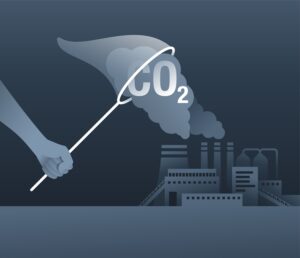 Deep Sky, a Montreal-based carbon removal project developer, successfully completed its first CO₂ injection at the Thetford Mines site, marking the first time in Quebec that carbon captured directly from ambient air has been permanently stored underground. The CO₂ was captured by Sherbrooke-based Skyrenu using its pilot direct air capture technology. This project represents North America’s first step toward mineralization-based geological carbon storage, positioning Quebec as a leader in permanent carbon removal. Additional tests are planned to evaluate injection rates, reservoir characteristics, and scaling potential, with the long-term goal of establishing a large-scale site capable of removing over 500,000 tonnes of CO₂ annually, equivalent to the carbon sequestration of 25 million mature trees. Deep Sky operates as a tech-agnostic carbon removal project developer, combining multiple direct air capture technologies to commercialize high-quality carbon credits and accelerate permanent carbon storage solutions. The company, backed by $130 million in funding from prominent investors including Investissement Québec, Breakthrough Energy Catalyst, and BDC Climate Fund, aims to contribute toward Quebec’s climate targets. According to provincial and international assessments, Quebec will require 13 million tonnes of permanent carbon removal per year by 2045–2050, while global demand is projected at 7.6 billion tonnes annually by 2050. Deep Sky’s Thetford Mines initiative is a critical step in building infrastructure to meet these long-term carbon neutrality goals.
Source: Cision
Newfoundland and Labrador 
Clean energy storage project on Newfoundland and Labrador’s coast gets green light
Triple Point Resources Ltd. received approval to advance the Fischells Salt Dome clean energy storage project on Newfoundland and Labrador’s west coast following a study confirming the site’s thermodynamic stability and suitability for large-scale energy storage. The project aims to capture surplus renewable energy—primarily wind and hydro—and store it for on-demand electricity supply, enhancing the reliability and flexibility of the provincial grid. The study, supported by MITACS and led by a PhD candidate at the Institut national de la recherche scientifique, reinforced the salt dome’s capacity to safely and efficiently store energy, providing a critical step toward creating a regional clean energy reserve for local and export markets.
WSP Canada has been selected to provide consulting expertise, leveraging its global and local experience in underground energy storage and hydrogen projects. The Fischells Salt Dome initiative will utilize Compressed Air Energy Storage (CAES) technology in salt caverns to stabilize the grid, capture surplus renewable energy, and deliver zero-emission power when demand peaks. Strategically located near Stephenville along major transmission infrastructure, the project is expected to generate long-term economic benefits and employment for Newfoundland communities. Triple Point has also launched a Supplier Registration Database to engage local, regional, and national suppliers, demonstrating a commitment to transparency, community partnerships, and responsible development.
Source: Environment Journal
Nova Scotia 
Nova Sustainable Fuels Receives Approval to Produce Sustainable Aviation Fuel in Guysborough County
Nova Sustainable Fuels has received environmental assessment approval for the first phase of its renewable energy park in Goldboro, Guysborough County, aimed at producing sustainable aviation fuel (SAF). The project will use waste biomass from Nova Scotia’s forestry and forest-based industries to create low-emission aviation fuel, providing an alternative to petroleum-based fuels. The provincial Minister of Environment and Climate Change highlighted that the project supports carbon emissions reduction, job creation, and economic growth further positioning Nova Scotia as a leader in climate action and clean energy innovation. The second phase, which requires a separate environmental assessment, will include a wind and solar farm and transmission infrastructure to supply renewable energy for fuel production. The project is expected to generate approximately 1,000 construction jobs and up to 80 permanent operational jobs, along with indirect economic benefits for local communities. Approval comes with 34 stringent environmental conditions to protect human health and the environment, and the project will also require industrial and water withdrawal permits By utilizing surplus forestry biomass, the project creates a new market for byproducts like wood chips and bark. Oversight by Nova Scotia’s environmental regulator ensures compliance with provincial standards, with around, 400 inspections conducted in 2024 to enforce environmental laws and terms of approval.
Nunavut 
Canada supports the Nunatsiavut Government’s leadership in Inuit-led, community-based clean energy initiatives
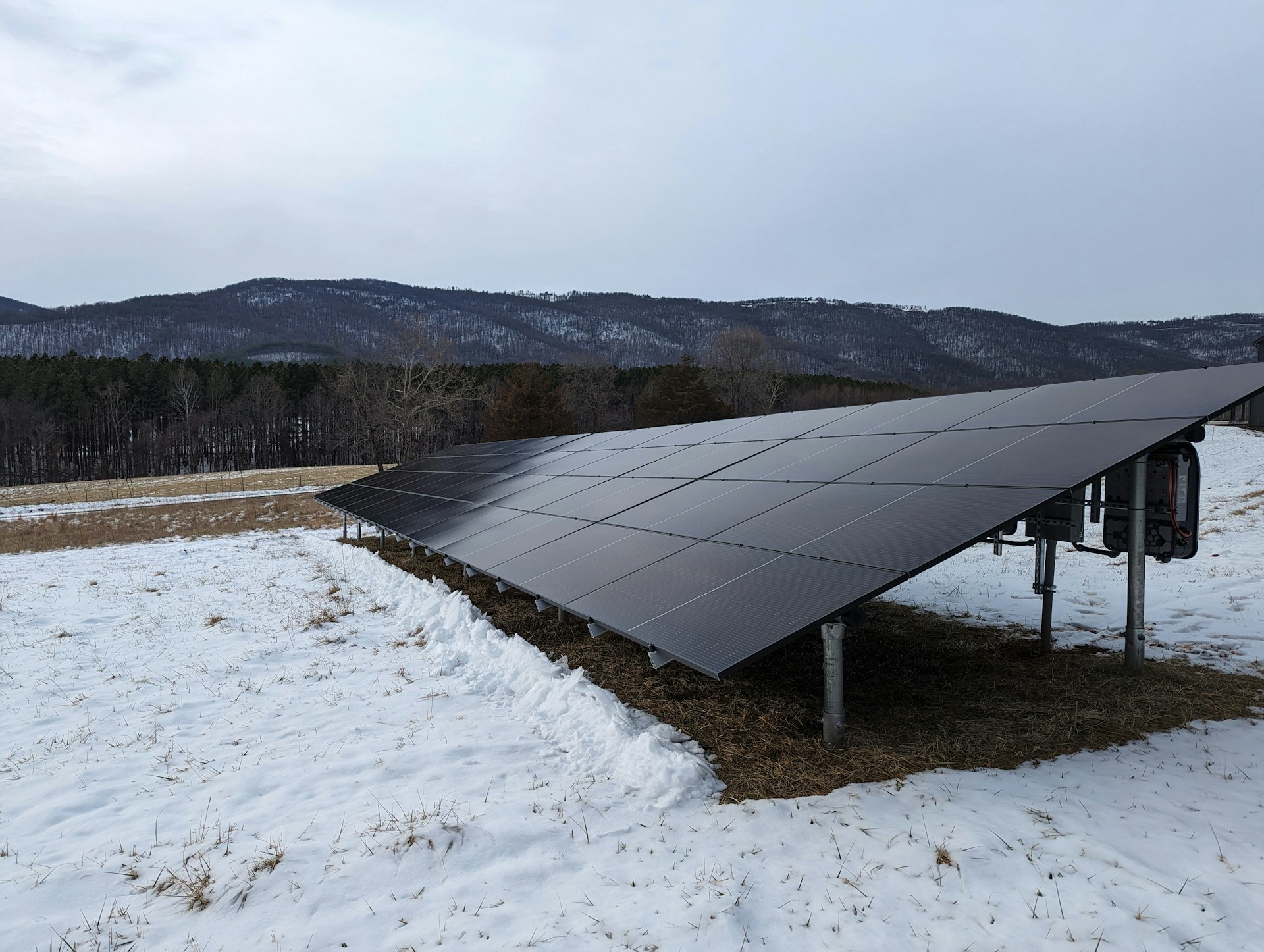 The Government of Canada has announced nearly $22 million in funding to support Inuit-led clean energy initiatives in Nunatsiavut, Newfoundland and Labrador. The investments aim to advance renewable energy projects that harness wind, solar, and tidal power to reduce reliance on diesel, cut greenhouse gas emissions, and improve energy security for remote northern communities. Key projects include the Nain Wind Microgrid, which will add two 1.5 kW turbines with battery storage, expected to displace up to 1.6 million litres of diesel annually, and tidal and solar projects near Rigolet and other communities, including the Makkovik Arena Solar Project and community solar installations across Nain, Rigolet, Postville, and Hopedale. These initiatives are part of the Nunatsiavut Government’s Adapt Nunatsiavut climate plan and are supported through federal programs such as the Clean Energy for Rural and Remote Communities Program, Northern REACHE, and the Energy Innovation Program. The projects aim to combine Inuit traditional knowledge with modern renewable technologies, creating economic opportunities, supporting environmental stewardship, and promoting energy sovereignty. Federal and local leaders emphasized that these investments demonstrate effective collaboration, strengthen Arctic resilience, and showcase Inuit leadership in climate adaptation and clean energy development.
Source: Global Renewable News
Northwest Territories 
Conservationists call for greater protection of NWT peatlands
A recent report from Wildlife Conservation Society (WCS) Canada highlights that the Northwest Territories (NWT) has insufficient policies for peatland conservation, despite the territory containing the country’s second-largest peatland area after Ontario. Peatlands are crucial as the world’s largest terrestrial carbon store, capturing roughly 150 billion tons of carbon. The report emphasizes the urgent need for improved mapping, baseline data collection, and stronger protection measures, particularly in light of climate change, resource extraction, and human development pressures. Current gaps in inventory and monitoring, compounded by fire impacts on the landscape, have hindered effective management of these ecosystems. The report recommends that the GNWT strengthen environmental assessment requirements, including carbon storage and greenhouse gas evaluations for any development affecting peatlands. It also highlights the importance of preventing peatland disturbance over restoration, as even decades-long restoration cannot fully compensate for carbon released during degradation. Indigenous stewardship practices, such as cultural and prescribed burns, were identified as key strategies for enhancing landscape resilience. Overall, WCS Canada calls for coordinated federal, territorial, and Indigenous action and international support to safeguard NWT peatlands, reflecting their global climate significance.
Source: Cabin Radio
Yukon 
Yukon government looking to restart renewable energy rebate program
 The Yukon government has announced plans to restart the territory’s microgeneration program, which allows residents to sell surplus renewable energy, such as solar power, back to the electrical grid. The program was paused two years ago in Whitehorse and surrounding areas due to concerns about grid stability, though existing projects were unaffected. Energy, Mines and Resources Minister Ted Laking stated that the government aims to establish clear conditions for the program’s reinstatement, responding to public demand for affordable and reliable energy. The current pause is set to remain in effect until January 2026. Local renewable energy company Solvest, which has grown from six to over 60 employees over the past decade, emphasized the program’s importance to its success. Approximately 800 homes in Yukon currently have solar panels, and stakeholders are optimistic that the program’s return will strengthen the territorial renewable energy market, promote economic growth, and support Yukoners in generating clean energy.
Source: CBC