Alberta 
Revisiting the ‘deal’—it does not look good for Alberta
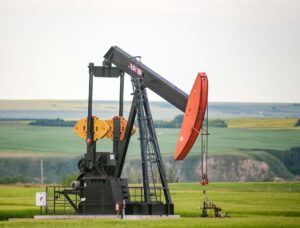 The late-November agreement between the Alberta government and the federal government is positioned to significantly influence Alberta’s energy policy over the long term. Under the agreement, Alberta committed to achieving net-zero greenhouse gas emissions by 2050, planned a substantial increase in the provincial industrial carbon tax by April 2026, and supported a proposed $16.5 billion carbon capture, utilization and storage (CCUS) initiative known as Pathways, led by Canada’s largest oil companies. In exchange, the federal government withdrew a proposed emissions cap on Alberta’s oil and gas sector, paused the application of Clean Electricity Standards in the province, and offered conditional concessions, including the possibility of new pipeline access to the West Coast. The Smith government presented the agreement as a milestone for Alberta’s energy independence and resource sovereignty. While the deal may keep carbon-related revenues and spending within Alberta and potentially support local employment, the broader economic implications are likely negative. Higher carbon taxes and large-scale industrial policy commitments are expected to raise production costs and reduce the global competitiveness and profitability of Alberta’s oil and gas sector. The agreement conflicts with Alberta’s stated free-market principles and aligns the province with expansive federal climate policy frameworks. Although credit goes to Premier Smith for forcing public negotiations that acknowledged federal policies’ economic impacts on Alberta, the deal is unfavourable as structured and will require substantial revision, framing it as the beginning of a renewed debate over Alberta’s energy policy sovereignty rather than its resolution.
Source: Fraser Institute
Electricity Prices for Alberta
The Alberta power pool price averaged 3.944 cents per kWh in January 2026. This price is 0.44 cents higher than last month’s average of 3.900 cents. The pool price has averaged 4.463 cents per kWh over the last 12 months.
As of February 1, 2026, the forward market was predicting electricity prices for the calendar years of 2026, 2027, 2028, 2029, 2030, and 2031. These prices are 4.522, 5.227, 6.275, 6.575, 6.875, and 7.175 cents per kWh respectively.
Gas Prices for Alberta
Direct Energy’s gas rate for January 2026 was $3.331 per GJ in Alberta. The February 2026 rate has been set at $2.422 per GJ. Alberta gas prices have averaged $2.055 per GJ over the last 12 months.
As of February 1, 2026, the forward market was predicting gas prices for the calendar years of 2026, 2027, 2028, 2029, and 2030. These prices are 2.26, 2.62, 2.64, 2.60, and 2.61 cents per GJ respectively.
British Columbia 
B.C. launching competitive process for clean power in high-demand sectors
The Province of British Columbia and BC Hydro are introducing a new competitive process for artificial intelligence (AI) and data-centre projects to manage rapidly increasing electricity demand while preserving system affordability and reliability. Clean electricity demand is rising as B.C.’s AI sector expands and data centres become increasingly important for data sovereignty and economic growth. Under new legislative and regulatory changes enabled by Bill 31, prospective AI and data-centre projects will be required to participate in a competitive selection process to access clean electricity, while traditional industries such as mining, LNG, forestry, manufacturing, and hydrogen for domestic use are exempt. The framework is designed to prioritize projects that deliver strong economic, employment, environmental, and community benefits, consistent with the province’s Look West strategy. BC Hydro will implement the new approach through a 2026 call for demand for emerging industries, with up to 400 megawatts of electricity allocated over the first two years. Projects will be evaluated based on price and broader public-interest criteria, including job creation, data sovereignty, emissions impacts, and long-term economic value. To maintain investor confidence, projects already well advanced in BC Hydro’s interconnection queue will continue under existing processes. The competitive process opens on January 30, 2026, with successful applicants to be notified by September 2026, and ongoing engagement with First Nations, local governments, and industry partners will support responsible development aligned with provincial economic and climate objectives.
Source: Government of British Columbia
Ontario 
Ontario pins hopes on storage batteries to sustain struggling EV supply chain
 Ontario’s ambitious plan for an end-to-end electric vehicle (EV) supply chain has encountered significant setbacks as automakers delay or cancel projects. Honda postponed its EV battery plant and vehicle assembly in Alliston, Umicore paused its cathode plant in eastern Ontario, and General Motors ended production of its BrightDrop electric delivery vans. Ford shifted focus from EVs to gas-powered F-Series trucks, citing market conditions and trade uncertainties, including the Canada-China deal affecting EV tariffs. Experts attribute the slowdown to uncertainty around federal EV incentives, sales mandates, and Canada-U.S. trade, which have dampened investor confidence despite global EV sales growth.
In response, some manufacturers are pivoting to battery storage applications to leverage Ontario’s investment in battery plants. Stellantis, for example, is retooling its NextStar facility in Windsor to produce batteries for energy storage, while Volkswagen’s St. Thomas PowerCo plant is designing cells for both automotive and stationary storage markets. Government officials, including Economic Development Minister Vic Fedeli, support this pivot, emphasizing that job creation is the priority, regardless of whether the batteries are used in vehicles or stationary storage. Analysts note that this shift presents a strategic opportunity, given rising electricity demand in Ontario — projected to grow 75% by 2050 — and the increasing need for reliable storage for both EVs and AI-driven infrastructure.
Source: The Canadian Press News
Saskatchewan 
Court dismisses appeal challenging Saskatchewan’s coal plans
The Court of King’s Bench has dismissed an appeal opposing the extension of coal-fired power generation in Saskatchewan, ruling against the Saskatchewan Environmental Society (SES), Citizens for Public Justice, and three individual applicants. In a Jan. 12 decision, the court determined that the matter falls within the realm of government policy rather than judicial oversight. The Government of Saskatchewan welcomed the ruling in a Jan. 13 news release, stating that the decision affirms its authority to set energy policy. The province reiterated its Saskatchewan First Energy Security Strategy and Supply Plan, which includes extending the life of existing coal-fired plants while transitioning to nuclear power using Saskatchewan-mined uranium, with the stated goal of ensuring reliable and affordable electricity. The SES expressed disappointment with the ruling, emphasizing that the court did not evaluate the legality, public interest, or scientific implications of extending coal use. The organization argued that coal remains the most polluting form of electricity generation and that prolonging its use contradicts scientific evidence, national climate commitments, and trends across Canada, where other provinces have phased out or committed to phasing out coal by 2030. SES representatives cited heightened environmental, health, and economic risks associated with continued coal reliance, particularly given the Prairie region’s accelerated warming and increasing climate impacts. The SES said it will continue advocating for evidence-based energy planning and a faster transition to cleaner, more modern electricity systems in Saskatchewan.
Source: Sask Today
Manitoba 
‘Start scaling up now’: 26 groups call on Manitoba to take bolder climate action
More than two dozen organizations are urging the Manitoba government to significantly increase investments in climate solutions in its upcoming 2026 provincial budget, citing the impacts of a devastating 2025 wildfire season and severe drought. Representatives from 26 groups, coordinated by Climate Action Team Manitoba, presented a letter at the legislature calling for expanded funding for energy efficiency, public and active transportation, and land and water protection. The groups argue that Manitoba is already experiencing some of its most severe climate impacts, including strains on Manitoba Hydro, and warn that delays in transitioning away from fossil fuels will intensify environmental and economic risks. While environmental advocates welcomed the province’s October climate strategy outlining a pathway to net-zero emissions by 2050, they criticized the lack of firm funding commitments and timelines to support its implementation. The letter recommends scaling up investments in programs such as Efficiency Manitoba to reduce household energy costs, create local jobs in green building and construction, and cut emissions from natural gas heating, one of the province’s largest pollution sources. It also calls for increased and stable funding for urban, intercity and rural public transit, restoration of the 50-50 transit funding partnership with Winnipeg, and greater support for active transportation. In addition, the groups urge the province to boost staffing and funding for parks and conservation, including support for Indigenous-led land and water protection, to meet the goal of conserving 30 per cent of Manitoba’s lands and waters by 2030. Environment and Climate Change Minister Mike Moyes said the government is open to working with stakeholders, noting increased departmental staffing and upcoming legislated emissions targets and action plans expected to roll out alongside the spring budget.
Source: The Narwhal
New Brunswick 
What Canada’s nuclear waste plan means for New Brunswick
 Canada has taken a significant step toward establishing a Deep Geological Repository (DGR) for used nuclear fuel, with the Nuclear Waste Management Organization submitting its Initial Project Description to federal regulators in early 2026. The proposed facility in northwestern Ontario would serve as the permanent destination for nuclear waste generated across the country, including fuel currently stored at New Brunswick’s Point Lepreau Nuclear Generating Station. If approved, more than 2,100 shipments of highly radioactive waste would be transported approximately 2,900 kilometres from New Brunswick to Ontario over 10 to 15 years. The proposal raises concerns in New Brunswick about long-term safety, accountability, and costs, particularly as the province continues to invest in nuclear power and consider new reactors, thereby extending its exposure to nuclear waste risks that persist for generations. The article argues that the DGR process is flawed by limited public consultation, scientific uncertainty, and insufficient scrutiny of radioactive waste transportation. No deep geological repository for high-level nuclear waste is yet operating globally, and critics warn Canada is setting a precedent based on unproven long-term assumptions. Environmental groups, Indigenous organizations, and experts have raised concerns about the short 30-day public comment period, the adequacy of consent in affected regions, and the exclusion of waste transport from the initial federal impact assessment. Advocates are calling for extended consultations, full assessment of transport risks, and meaningful Indigenous and public consent, emphasizing that decisions made now will shape environmental, health, and safety outcomes for communities in New Brunswick and across Canada for generations.
Source: NB Media Co-op
Prince Edward Island 
PEI’s greenhouse gas emissions drop
Prince Edward Island has recorded a third consecutive year of greenhouse gas emission reductions despite significant population growth, according to the latest Minister’s Report on Climate Change. Total provincial emissions declined to 1.59 megatonnes in 2025, a 0.9 per cent decrease from the previous year, even as the population grew by nearly 17 per cent over the same period. The report attributes this progress to reduced fossil fuel demand, down more than 4.5 per cent, and to actions taken by households, businesses, and government. Environment, Energy and Climate Action Minister Gilles Arsenault said the reductions are delivering practical benefits for Islanders, including lower energy costs, improved reliability during extreme weather, and long-term protection for the economy and natural environment. The report highlights a range of climate and resilience initiatives undertaken in 2024–2025, including energy efficiency upgrades in more than 13,000 households, heat pump installations in social housing, expanded rural transit use, and completion of active transportation projects across the Island. Additional measures focused on climate resilience and conservation, such as coastal hazard assessments, expansion of natural areas, increased tree nursery production, and the launch of new climate risk mapping and emergency preparedness tools. Looking ahead, the province plans to advance a net-zero action plan, shoreline management strategies, and implement its new energy strategy, aimed at improving energy equity, strengthening consumer protections, and upgrading infrastructure to support long-term climate goals.
Source: Prince Edward Island
Québec 
Postponing the climate target increases risks and costs for Quebec
The Advisory Committee on Climate Change has responded to the Quebec government’s decision to postpone its greenhouse gas (GHG) emissions reduction target from 2030 to 2035, warning that this delay will concentrate the necessary emissions reductions into a shorter timeframe, thereby increasing technical, economic, and social challenges. In its report, *Defining Quebec’s Climate Ambition: Targets and Decarbonization Pathways*, the Committee emphasized that achieving carbon neutrality by 2050—or as early as 2045—will require significantly steeper and costlier reductions than previously planned. The Committee notes that recent climate data, including the Copernicus report confirming 2025 as the third warmest year globally, underscores the urgency of maintaining a strong decarbonization trajectory. While recognizing current economic and geopolitical constraints, the Committee stressed that predictability and stable planning frameworks are essential for public, economic, and municipal stakeholders to implement structural investments and transitions across sectors. The Committee also highlighted the risk of Quebec falling out of alignment with the Paris Agreement and international climate trajectories, citing ambitious targets in the United Kingdom, European Union, and California as benchmarks for comparison. Despite the postponement, the Committee urged continued acceleration of structural measures, particularly in transportation, industry, and buildings, along with stronger integration of land and forestry carbon sequestration strategies. It recommended a more frequent review of climate targets, ideally by 2027, to ensure accountability and alignment with global climate assessments such as the COP33 stock take. Quebec’s decarbonized electricity sector, innovative industrial base, and public support for climate action provide strong foundations, but the Committee concluded that achieving long-term climate goals will now require heightened mobilization across all stakeholders and a renewed, strategic approach to maintain a just and effective transition.
Source: Quebec
Newfoundland and Labrador 
Canada, FCM Aid 80 Municipalities in Climate Resilience
 The Government of Canada, in partnership with the Federation of Canadian Municipalities (FCM), announced $7.1 million in funding through the Green Municipal Fund’s Local Leadership for Climate Adaptation initiative to support 80 climate adaptation projects nationwide, including 25 projects in Newfoundland and Labrador. These projects are designed to strengthen community resilience by supporting climate adaptation planning, climate-focused asset management, and community-wide risk assessments. The initiative addresses growing climate threats across Canada, including floods, severe storms, and wildfires, emphasizing that building resilience is both economically prudent and essential for protecting lives, infrastructure, and local economies. In Newfoundland and Labrador, the Town of Hare Bay is receiving $70,000 for watershed delineation and climate adaptation planning. By equipping municipalities with funding and technical expertise, the initiative supports Canada’s National Adaptation Strategy, empowering communities to proactively address climate risks and enhance long-term resilience, safety, and public health.
Source: The Mirage
Nova Scotia 
Nova Scotia emerges as national leader in renewable energy market
Canada’s annual Renewables in Review report from Business Renewables Centre-Canada (BRC-Canada) highlights a dramatic decline in corporate renewable energy procurement in Alberta, with deals dropping 99 per cent from 2023 levels. Only a single deal was publicly announced in 2025, originating from the carbon dioxide removal sector, signaling emerging demand in niche markets but reflecting a broader stall in Alberta’s traditional corporate renewable sector. BRC-Canada attributes this collapse to three years of policy uncertainty affecting market design, transmission access, and carbon pricing, which have collectively frozen commercial transactions that previously generated billions in clean energy investment. Ongoing reforms, including changes to the Restructured Energy Market (REM), transmission policies, and TIER carbon pricing compliance, are cited as key barriers undermining Alberta’s market confidence and renewable credit demand. In contrast, Nova Scotia has become Canada’s most active corporate clean energy market, marking the first time a province outside Alberta has led in annual procurement. The province’s Green Choice Program delivered 262 MW of new wind capacity in 2025, with all projects co-owned by Mi’kmaw communities, and engaged 11 participating buyers spanning public institutions and private corporations. BRC-Canada emphasizes that Nova Scotia’s success demonstrates the effectiveness of well-designed provincial programs in unlocking private-sector renewable energy demand. The report calls on Alberta to restore policy certainty to revive its renewable energy market and reaffirm its historical leadership in corporate clean energy investment.
Source: Environment Journal
Nunavut 
Nunavut natural gas extraction could be coming soon
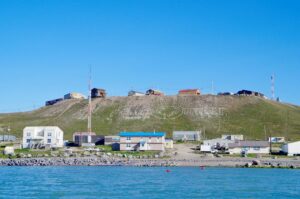 The Government of Canada has announced nearly $22 million in funding to support Inuit-led clean energy initiatives in Nunatsiavut, Newfoundland and Labrador. The investments aim to advance renewable energy projects that harness wind, solar, and tidal power to reduce reliance on diesel, cut greenhouse gas emissions, and improve energy security for remote northern communities. Key projects include the Nain Wind Microgrid, which will add two 1.5 kW turbines with battery storage, expected to displace up to 1.6 million litres of diesel annually, and tidal and solar projects near Rigolet and other communities, including the Makkovik Arena Solar Project and community solar installations across Nain, Rigolet, Postville, and Hopedale. These initiatives are part of the Nunatsiavut Government’s Adapt Nunatsiavut climate plan and are supported through federal programs such as the Clean Energy for Rural and Remote Communities Program, Northern REACHE, and the Energy Innovation Program. The projects aim to combine Inuit traditional knowledge with modern renewable technologies, creating economic opportunities, supporting environmental stewardship, and promoting energy sovereignty. Federal and local leaders emphasized that these investments demonstrate effective collaboration, strengthen Arctic resilience, and showcase Inuit leadership in climate adaptation and clean energy development.
Source: Penticton Herald
Northwest Territories 
Federal electricity strategy has opportunities for all jurisdictions: NWT Premier
The Northwest Territories (NWT) is evaluating options to expand its electricity capacity as part of Canada’s forthcoming national electricity strategy, which aims to double the country’s grid capacity. Premier RJ Simpson highlighted that the territory is considering multiple approaches, including expanding the Taltson Hydro dam and connecting the NWT grid to southern grids, such as Saskatchewan’s. The Taltson expansion project, including a high-voltage line under Great Slave Lake, is estimated at $2–3 billion and requires federal funding beyond the $25 million already committed from the Critical Minerals Infrastructure Fund. Simpson emphasized that Indigenous concerns over the legacy impacts of the original Taltson project on traditional lands must be addressed before development can proceed. The proposed hydro power could also support the Gray’s Bay all-season road and deep-water port, facilitating energy access for mining operations and future critical mineral projects. At the same time, the NWT faces an impending economic transition with the closure of several diamond mines, historically a major contributor to regional GDP. Simpson pointed to the territory’s substantial oil and natural gas reserves as opportunities for economic growth, advocating for potential lifting of the offshore petroleum exploration moratorium. He suggested natural gas could serve as a “bridge fuel” in the energy transition, though acknowledging concerns about methane emissions and climate impacts. The Premier stressed the importance of federal attention and investment, noting that infrastructure projects, expanded hydropower, and support for critical mineral development could bolster the North’s economy while addressing climate challenges, local energy needs, and Indigenous partnerships.
Source: Canada’s National Observer
Yukon 
Yukon signs deal with Canada’s west and north to ‘unlock’ critical minerals
The Yukon government has joined a memorandum of understanding (MOU) with British Columbia, Alberta, Saskatchewan, Manitoba, Northwest Territories, and Nunavut to accelerate the development and export of critical minerals, including copper, nickel, and tungsten, essential for clean energy, batteries, and everyday technologies. Announced on January 25, 2026, the MOU aims to strengthen supply chains, diversify export markets, and position Canada’s west as a reliable global supplier. Yukon Energy Minister Ted Laking emphasized that reliable winter power and grid capacity are crucial to attracting industrial investment and ensuring the territory can support expanded mining activity. The MOU also lays the groundwork for a Western Canadian Critical Minerals Strategy, with officials targeting completion of the strategy by the end of summer 2026. Nunavut’s participation is pending expected approval in early February, after which the full agreement will be publicly released. The announcement coincided with the annual AME Roundup mining conference in Vancouver, which saw Yukon government, industry, First Nations, and community representatives in attendance, though the Yukon NDP again boycotted the event citing unresolved territorial mining concerns. The Yukon government highlighted the importance of federal support for large-scale infrastructure, including the proposed North Coast Transmission Line and a Yukon-B.C. grid connection project, estimated to be worth billions, to ensure industrial-scale power availability. Minister Laking noted that without federal investment, small jurisdictions like Yukon cannot fully capitalize on their critical mineral potential, which is vital for economic growth, energy security, and advancing Canada’s clean energy transition.
Source: Yukon News