

Alberta 
‘Mayday to Ottawa’: $400M carbon capture facility could be cancelled after changes to Alberta’s carbon tax
 A proposed $400-million waste-to-energy facility in Edmonton is at risk of cancellation following changes to Alberta’s industrial carbon pricing agreement with the federal government. Under the revised plan, the carbon price will increase to $130 per tonne by 2040 instead of the previously planned $170 per tonne by 2030, reducing the value of carbon credits that projects like Varme Energy’s rely on for financial viability. Although the project has secured agreements with the City of Edmonton, provincial permits, government funding, and support through the Canada Growth Fund, Varme Energy CEO Sean Collins stated that the lower carbon price has created a significant revenue shortfall and warned that the project may be cancelled if additional government support is not introduced soon.
The policy change has broader implications for Canada’s carbon capture industry. Industry leaders and researchers argue that a lower carbon price will discourage investment in emissions-reduction projects and make many carbon capture initiatives financially unviable despite existing tax credits and incentives. While the federal government maintains that new minimum carbon credit prices will provide investment certainty, companies are seeking further policy changes, such as access to larger domestic and international carbon credit markets. Varme Energy has indicated that without these measures, construction will not proceed and the project could be abandoned later this year.
Source: CBC
Electricity Prices for Alberta
The Alberta power pool price averaged 1.736 cents per kWh in June 2026. This price is 2.562 cents lower than last month’s average of 4.298 cents. The pool price has averaged 3.897 cents per kWh over the last 12 months.
As of June 1, 2026, the forward market was predicting electricity prices for the calendar years of 2026, 2027, 2028, 2029, 2030, and 2031. These prices are 4.264, 4.656, 6.294, 7.525, 8.300, and 8.600 cents per kWh respectively.
Gas Prices for Alberta
Direct Energy’s gas rate for June 2026 was $2.076 per GJ in Alberta. The July 2026 rate has been set at $1.595 per GJ. Alberta gas prices have averaged $1.914 per GJ over the last 12 months.
As of July 1, 2026, the forward market was predicting gas prices for the calendar years of 2026, 2027, 2028, 2029, and 2030. These prices are 1.78, 2.24, 2.41, 2.42, and 2.43 cents per GJ respectively.
British Columbia 
New BC Hydro plan underpowers B.C.’s electrified future
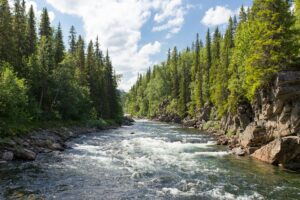 Clean Energy Canada has responded to British Columbia and BC Hydro’s Powering Growth, Fueling Opportunity plan by welcoming its comprehensive approach while arguing that it lacks sufficient ambition to meet the province’s long-term electricity needs. The organization states that the plan’s projection of a 50% increase in electricity demand by 2050 is inconsistent with both B.C.’s 2024 Clean Energy Strategy and the federal Electricity Strategy, which anticipate electricity demand will double by 2050. It warns that underestimating future demand could force difficult trade-offs between industrial electrification and the electrification of homes and transportation, potentially limiting cost-saving opportunities for British Columbians through electric vehicles and heat pumps.
The organization supports the plan’s emphasis on energy conservation, grid optimization, renewable energy, battery storage, and technologies such as electric vehicles, heat pumps, and smart thermostats to improve grid efficiency and reduce peak demand. However, it recommends stronger policies to accelerate clean energy adoption, including more ambitious electric vehicle sales requirements and regulations promoting heat pumps over conventional air conditioners. Overall, Clean Energy Canada concludes that while the plan includes many positive elements, greater investment and higher electricity demand targets are needed for B.C. to fully capitalize on its clean electricity advantage and support a competitive, electrified economy.
Source: Clean Energy Canada
Ontario 
Batteries beat gas in Ontario’s latest electricity auction
Ontario has selected three large-scale battery energy storage projects through its second Long-Term Request for Proposals (LT2), securing 640 megawatts (MW) of new storage capacity to help meet rising electricity demand. The projects, located in Greater Napanee, Kenora District, and Norfolk County, include First Nations partners with at least 50% equity ownership and are expected to begin operating by May 2030 under 20-year contracts. Provincial officials stated that the projects will provide enough capacity to power approximately 640,000 homes during peak demand and were awarded at significantly lower costs than previous battery procurements, demonstrating the effectiveness of competitive bidding. Environmental and clean energy organizations welcomed the results, noting that battery storage outperformed natural gas plants on both cost and reliability in the competitive auction. They highlighted rapidly declining battery costs and argued that expanding energy storage, alongside renewable energy and conservation measures, can reduce greenhouse gas emissions, improve energy security, and lessen Ontario’s reliance on imported U.S. natural gas. While Ontario continues to project a significant role for natural gas in its long-term electricity plan, industry experts contend that further investment in battery storage and renewable energy could better meet the province’s growing electricity demand while supporting economic growth and emissions reduction.
Source: Canada’s National Observer
Saskatchewan 
Feds, Saskatchewan align on nuclear strategy to fuel net-zero future
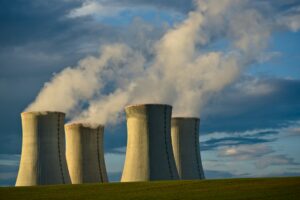 The Government of Saskatchewan has expressed strong support for Ottawa’s new National Nuclear Energy Strategy, stating that the province will play a critical role in advancing Canada’s clean energy transition. Provincial officials emphasized that Saskatchewan, as Canada’s only domestic uranium producer, is essential to the federal goal of becoming a global leader in nuclear energy. The strategy aligns with Saskatchewan’s long-term objectives, including achieving a net-zero electricity grid by 2050, expanding nuclear supply chains and skilled labour, securing federal financing for reactor development, and promoting Indigenous participation in future nuclear projects.
The province is continuing to evaluate nuclear energy options through SaskPower, which is assessing potential sites for small modular reactors (SMRs) while also researching larger-scale nuclear technologies. Saskatchewan officials welcomed the federal government’s collaborative approach to energy policy, highlighting the importance of allowing provinces to pursue solutions that reflect their unique circumstances. The announcement also builds on the 2026 agreement establishing a National Energy Corridor, which aims to strengthen interprovincial electricity infrastructure and improve the transmission of reliable, baseload power across Canada.
Source: Meridian Source
Manitoba 
‘More sustainable future’: Canadian government helping bring renewable energy microgrid to northern Manitoba
The federal government has announced $21.6 million in funding to support renewable energy projects in Sayisi Dene First Nation at Tadoule Lake, Manitoba, with the goal of improving energy security and reducing reliance on diesel-generated electricity. The first phase of the initiative will establish Manitoba’s first renewable energy microgrid, integrating solar power, battery storage, and smart energy management systems. The project is expected to reduce carbon dioxide emissions by approximately 500 tonnes annually, lower local energy costs, and cut diesel consumption by 26% per year, with a long-term target of reducing diesel dependence by 60%.Federal officials stated that the project will provide cleaner, more reliable electricity while supporting economic development in the community. Community leaders welcomed the investment, noting that revenue generated from the solar installation will be reinvested into local priorities and sustainability initiatives. Construction of the solar field, which will be located beside the existing diesel plant, is scheduled to begin this summer, with the microgrid expected to be operational by the fall.
Source: CTV News
New Brunswick 
Members of the Environmental Rights Caucus Urge the Government to Halt the Tantramar Gas and Diesel Plant
 The New Brunswick Environmental Rights Caucus (ERC) has raised concerns about the proposed Tantramar Gas Plant, arguing that the project could negatively affect human health and the environment through impacts on air quality, water, soil, and food systems. The organization states that emissions from the facility may include pollutants such as nitrogen oxides, sulphur dioxide, particulate matter, volatile organic compounds, and other substances associated with fossil fuel combustion, which have been linked by major health authorities to respiratory and cardiovascular diseases, cancer, adverse pregnancy outcomes, and premature death.
The ERC also emphasizes that continued reliance on fossil fuels contributes to climate change, increasing the risks of extreme weather events and other environmental impacts. The ERC is recommending that the provincial government require a Public Health Risk Assessment to evaluate the project’s potential health effects, including the formation of ground-level ozone, before any approval is granted. The organization also calls for the project to undergo a Comprehensive Review Assessment under New Brunswick’s Environmental Impact Assessment process, allowing for greater public participation, Indigenous engagement, and independent expert review. The group urges the Minister of the Environment to withhold project approval until all environmental assessment requirements have been completed and concludes that the proposed gas plant poses significant public health and environmental concerns.
Source: New Brunswick Environmental Network
Prince Edward Island 
Latest climate data shows P.E.I. emissions dropping
 Prince Edward Island’s greenhouse gas emissions continued to decline in 2024, falling to 1,493 kilotonnes (kt) from 1,540 kt in 2023—a reduction of approximately 3%—despite the province’s population increasing by more than 3% over the same period. The reductions were driven largely by lower emissions from residential heating as more households transitioned from fossil fuel systems to electric heat pumps through provincial incentive programs. The province has legislated a target of reducing emissions to 1,200 kt by 2030, and provincial officials attribute recent progress to more than $350 million invested in energy efficiency initiatives, including heat pump rebates, home insulation, and winter heating assistance.
However, concerns have been raised about the province’s recent decision to pause its free heat pump program and reduce funding for its Office of Net Zero as part of efforts to address a projected $410-million budget deficit. While the government maintains that previously installed heat pumps will continue delivering long-term emissions reductions, energy efficiency experts warn that suspending these programs could slow future progress and increase the long-term cost of reducing fossil fuel use. Analysts note that Prince Edward Island has been a national leader in per-capita investments in energy efficiency, and caution that scaling back these initiatives may make it more difficult to achieve the province’s 2030 emissions reduction target.
Source: The Guardian
Québec 
$87B Quebec plan aims for 77% of energy consumed in province by 2050 from renewables
The Quebec government has released a 25-year energy resource management plan that aims to increase the share of the province’s energy consumption supplied by renewable sources to 77% by 2050, up from the current 48%. Energy Minister Bernard Drainville stated that achieving this target would reduce Quebec’s reliance on fossil fuels from 52% to 23% over the same period, supporting the province’s long-term energy transition and emissions reduction objectives. To meet these goals, the province plans to invest $87 billion in energy infrastructure, including upgrades to hydroelectric facilities and the development of new wind, solar, and bioenergy projects. Most of this investment is expected to be in addition to Hydro-Québec’s planned $200-billion investment through 2035 to expand electricity generation capacity and improve grid reliability, although government officials noted that a small, yet unspecified, portion of the funding will overlap with the utility’s existing capital plan.
Source: City News
Newfoundland and Labrador 
Canada invests in Newfoundland and Labrador’s energy sector
 The federal government has announced more than $4.5 million in funding for four energy projects in Newfoundland and Labrador aimed at improving industrial energy efficiency, advancing carbon management technologies, and strengthening the province’s energy sector. The largest investment of over $2.6 million will support Newfoundland and Labrador Hydro in identifying and implementing energy-saving measures at industrial facilities in communities served by diesel-generated electricity. Additional funding includes $141,500 for Tacora Resources to implement an energy management system at its Scully Mine, $1.2 million for Aker Solutions Canada to study a marine-based carbon dioxide transport and offshore storage system, and $497,200 for Angler Solutions to assess the feasibility of an offshore regional carbon capture and storage hub.
The federal government stated that these investments are intended to improve industrial productivity, reduce operating costs, create jobs, and enhance the competitiveness of Newfoundland and Labrador’s energy sector while supporting Canada’s goal of becoming a leader in both clean and conventional energy. The projects are funded through Natural Resources Canada’s Green Industrial Facilities and Manufacturing Program and the Energy Innovation Program, which support industrial energy efficiency, emissions reductions, and the development of innovative clean energy technologies.
Source: PR Newswire
Nova Scotia 
‘We can do better:’ Frustration growing over the rush for fossil fuel peaker plants in the Maritimes
Approximately 200 people gathered in New Glasgow, Nova Scotia, to protest the proposed construction of two 300-megawatt methane- and diesel-fired peaker plants in Pictou County, citing concerns over climate change, impacts on local watersheds, endangered species, and long-term dependence on fossil fuels. Organized by the community group Living Ecosystems and Power (LEAP), the demonstration called on the provincial government to halt the projects and instead pursue alternatives such as battery energy storage, which organizers argue is now a cleaner and more cost-effective solution. Protesters also criticized the environmental assessment process, noting that provincial approval was granted in 59 days and that the federal government declined to conduct a separate impact assessment despite significant public and Indigenous opposition.
judicial review of the provincial approval is scheduled for August. The article also highlights a broader debate over electricity reliability and energy planning in Atlantic Canada. While Nova Scotia’s Independent Energy System Operator (IESO) maintains that the gas plants are needed to ensure grid reliability during periods of high demand and low renewable generation, environmental groups, renewable energy developers, and energy experts argue that advances in battery storage, regional electricity integration, and updated resource planning could provide more affordable and lower-emission alternatives. Recent design changes to the proposed plants, including replacing water-based cooling with ammonia systems, have prompted additional concerns that the approved environmental assessment no longer reflects the current project design. The discussion extends beyond Nova Scotia, as New Brunswick and Prince Edward Island also evaluate fossil fuel generation, battery storage, and regional grid cooperation as part of their long-term energy strategies.
Source: Halifax Examiner
Nunavut 
Canada becoming ‘energy superpower’ as 4 Nunavut projects get federal funding, Idlout says
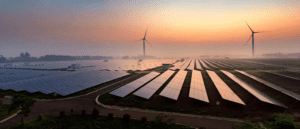 Nunavut will receive $17.2 million in federal funding for four clean energy projects aimed at reducing diesel dependence, advancing renewable energy development, and supporting Canada’s Arctic sovereignty goals. The funding, provided through federal natural resources and Crown–Indigenous relations programs, will support wind, solar, battery storage, and renewable energy planning initiatives led by Inuit and Indigenous organizations. Nunavut MP Lori Idlout emphasized that these projects demonstrate Indigenous leadership in the transition toward cleaner and more secure energy systems.
The largest investments include $4.8 million for Nunavut Nukkiksautiit Corp. to complete feasibility and engineering studies for solar and wind projects in Sanirajak, Kinngait, and Resolute Bay, which are expected to reduce future diesel consumption in those communities by more than 50%. The organization will also receive $8.5 million to build a clean energy system for the Aqsarniit Hotel and Conference Centre, while Qulliq Energy Corp. and Sakku Investments Corp. will receive funding for renewable energy studies and solar-battery projects. The initiatives aim to reduce Nunavut’s reliance on more than 54 million litres of diesel fuel annually, lower emissions, and strengthen long-term energy independence.
Source: Nunatsiaq News
Northwest Territories 
Ottawa’s investments in N.W.T. mine ‘will put cards in our hands,’ energy minister says
The federal government has announced up to $50 million in funding to support construction of an access road to the NICO mine site near Whatì, Northwest Territories, in partnership with the Tłı̨chǫ government and Fortune Minerals. The mine is expected to produce critical minerals including cobalt, bismuth, gold, and copper, which are important for technologies such as electric vehicle batteries and defence applications. Federal Energy and Natural Resources Minister Tim Hodgson stated that developing Canada’s own critical mineral resources will strengthen national security, economic independence, and Canada’s ability to control where these resources are supplied, including to international allies such as the United States.
Fortune Minerals said the project could help establish a more secure domestic supply chain, create jobs, and support economic development in the Northwest Territories’ mining sector. The investment comes amid growing global competition for critical minerals and increased focus on reducing supply chain vulnerabilities. Security experts noted that Canada’s resource advantages provide an opportunity to strengthen relationships with allies while using critical mineral development as a strategic economic and diplomatic tool.
Source: CBC
Yukon 
Ottawa understands energy woes, Yukon minister says, as feds back Yukon-B.C. grid connect
federal government has announced support for a future Yukon–British Columbia electricity grid connection project aimed at reducing Yukon’s reliance on diesel generation and improving long-term energy security. Yukon Energy, Mines and Resources Minister Ted Laking said the intertie would provide greater electricity stability by enabling two-way power transfers between Yukon and B.C., but he emphasized that the project, estimated to cost up to $4 billion, will take years to complete and will not address the territory’s immediate winter energy shortages.
Yukon has faced growing electricity demand, including narrowly avoiding rolling blackouts during an extreme cold period, highlighting the need for near-term solutions. In the interim, Yukon is pursuing additional measures, including new fossil fuel-powered generators, repairs to existing hydro infrastructure, and programs to reduce peak electricity demand. Federal Energy Minister Tim Hodgson described the territory’s interim approach as credible and said the grid connection would support future economic development, including critical mineral projects. The federal government is supporting five major electricity transmission projects across Canada as part of its broader strategy to strengthen energy reliability, expand interprovincial connections, and prepare for electricity demand that is expected to double by 2050.
Source: CBC