Alberta 
‘More energy, less methane,’ to come with $29 million investment, Alberta government says
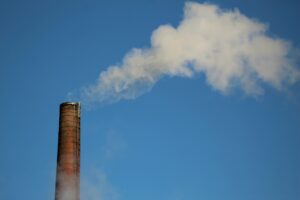 The Alberta UCP government announced two new programs totaling $29 million to reduce methane emissions while aiming to double oil and gas production by 2035. The funding comes from the industry-supported Technology Innovation and Emissions Reduction (TIER) system. Environment Minister Rebecca Schulz said Alberta is developing methane-reduction technologies that are used locally and globally, and the new programs will help lower costs, protect jobs, and attract investment. The first of two initiatives is the Methane Reduction Deployment Program delivered by Emissions Reduction Alberta (ERA), with $22 million in funding. It would provide up to $1 million per project, covering up to 50% of eligible costs, while supporting oil and gas companies in deploying methane-reduction technologies. The second initiative is the Methane Reduction Demonstration Program, running in partnership with the NGIF Accelerator, with $7 million to help startups and small businesses test new methane-reduction technologies at Alberta energy sites, bringing them closer to commercialization. The province reports that methane emissions from Alberta’s upstream oil and gas sector have already been reduced by 52% since 2014, saving industry approximately $600 million. Source: Red Deer News Now
Electricity Prices for Alberta
The Alberta power pool price averaged 5.772 cents per kWh in November 2025. This price is 2.484 cents higher than last month’s average of 3.288 cents. The pool price has averaged 4.282 cents per kWh over the last 12 months.
As of November 1, 2025, the forward market was predicting electricity prices for the calendar years of 2025, 2026, 2027, 2028, 2029, 2030, and 2031. These prices are 5.429, 5.060, 5.900, 7.675, 8.050, 8.350, and 8.350 cents per kWh respectively.
Gas Prices for Alberta
Direct Energy’s gas rate for November 2025 was $2.579 per GJ in Alberta. The December 2025 rate has been set at $3.390 per GJ. Alberta gas prices have averaged $1.918 per GJ over the last 12 months.
As of December 1, 2025, the forward market was predicting gas prices for the calendar years of 2025, 2026, 2027, 2028, and 2029. These prices are 3.15, 2.96, 2.98, 2.94, and 2.98 cents per GJ, respectively.
British Columbia 
Review of CleanBC provides realistic path to strengthen economy, cut emissions
 The CleanBC review outlines a practical and achievable path for British Columbia—and potentially all of Canada—to strengthen its clean-energy economy while reducing emissions and improving affordability. It emphasizes that B.C. already has a strong climate-policy foundation built over more than a decade, and that smart, updated policies are needed to maintain the province’s economic strength and climate leadership. The review highlights several priority recommendations: Strengthen industrial carbon pricing, particularly by correcting the oversupply of carbon credits to ensure strong incentives for low-carbon investment.
Tighten methane-reduction targets, offering a cost-effective way to cut emissions from a rapidly growing source. Expand the low-carbon fuel standard (LCFS) and tighten renewable natural gas rules to enhance credibility and effectiveness of existing clean-fuel policies. Leverage B.C.’s clean hydro-electric grid by continuing to expand low-cost renewable electricity as more sectors electrify. Improve integrated energy planning across BC Hydro, gas utilities, and the BC Utilities Commission so electricity and gas systems are managed cohesively for the transition away from gas heating. Refine the electric-vehicle mandate to broaden EV options and reduce costs for consumers. Monitor better real-world indicators to keep B.C. on track for net-zero by 2050. Enhance the role of the Climate Solutions Council with more resources and clear accountability to improve transparency and public trust. Source: Canadian Climate Institute
Ontario 
Statement: Ontario Big Battery Plan Falls Short of Clean Power
The Ontario government announced a major milestone for the Skyview 2 Battery Energy Storage System, a 400-MW project in partnership with the Algonquin of Pikwakanagan First Nation, promoted as Canada’s largest battery-storage procurement. While battery storage is essential for a modern, resilient electricity grid, critics argue that the announcement amounts to greenwashing because the province is not pairing new storage capacity with new renewable energy sources. Ontario is increasingly relying on natural gas to supply electricity—meaning the new battery system will often be charged using fossil-fuel power. The province’s current energy procurement strategy prioritizes gas plants while creating barriers to new wind and solar development. This shift began in June 2024 when Minister Stephen Lecce made the so-called “technology-agnostic” LT2 procurement process open to gas-fired generation. The resulting point system now favors fossil-fuel infrastructure and penalizes clean-energy proposals, undermining what was originally intended to be a competitive and renewable-focused process. Critics argue that if the process were genuinely competitive, renewables would win on cost alone, since wind and solar are the lowest-cost options for new electricity supply.
They say Ontario cannot claim clean-energy leadership while expanding gas and sidelining renewables. The province’s long-term energy plan further illustrates this direction: Nuclear power is expected to rise from 50% to 75% of Ontario’s electricity by 2050 through major refurbishments and new reactors. Gas generation will expand significantly over the next two decades, driving emissions from 2.5 Mt CO₂e (2017) to 20 Mt by 2030.Wind and solar capacity are projected to decline after the 2030s, despite their global cost advantages. Battery storage is slated to play only a marginal role, never exceeding a few percent of system capacity. Without a renewables-first strategy, announcements like this one present the appearance of climate progress while reinforcing Ontario’s dependence on fossil fuels and keeping the province “stuck in the past.” Source: Environmental Defence
Saskatchewan 
Saskatchewan plans to use dirty coal as ‘bridge’ to nuclear
Saskatchewan’s new energy strategy outlines a plan to extend coal-fired power generation beyond 2030 while pursuing the development of nuclear power, particularly small modular reactors (SMRs), as a long-term source of baseload electricity. The province positions coal as a transitional resource needed to maintain grid reliability during the nuclear build-out and is seeking federal support to cover 75 per cent of the cost of its first reactor. However, the strategy does not provide cost estimates, and experts note that comparable projects could require multi-billion-dollar investments. While Saskatchewan currently benefits from an equivalency agreement that delays federal coal-phase-out requirements until 2026, extending coal use beyond that period raises legal, regulatory, and financial considerations. Stakeholders have raised concerns regarding the province’s approach, including a legal challenge asserting insufficient consultation and misalignment with national and international climate obligations. Analysts also highlight risks associated with nuclear deployment timelines, potential ratepayer impacts, and the opportunity cost of not prioritizing lower-cost renewable energy sources supported by modern grid-management and storage technologies. The strategy does not emphasize carbon-capture solutions for coal facilities, despite their relevance under federal regulations. Saskatchewan remains one of three provinces still using coal for electricity generation and continues to play a significant role in the broader nuclear sector as a major global uranium producer. Source: Canada’s National Observer
Manitoba 
New Provincial Fossil Gas-Fired Power Plant Contradicts Climate Commitments, Misses Opportunities
 The Manitoba government’s recent announcement to support a new fossil gas–fired power plant has drawn criticism for undermining its climate, economic, and energy commitments. The proposed $3 billion plant, intended to address winter peak demand, relies on fossil gas, exposing the province to volatile fuel prices and supply risks, including extreme weather vulnerabilities and global turbine shortages. Critics argue that continuing investment in high-polluting thermal infrastructure contrasts sharply with the rapid advances and declining costs of renewable energy and energy storage, limiting Manitoba’s ability to develop an affordable, reliable, and fully renewable electricity grid. In contrast, the Climate Action Team Manitoba recommends meeting peak electricity demand through a combination of 600 MW of wind power and 200 MW of grid-scale battery storage. This approach would enhance grid reliability, maximize the capacity of existing and future wind projects, and support long-term electrification, green job creation, and economic development. The proposed gas plant also conflicts with the province’s recently reaffirmed commitment to a net-zero electricity grid by 2035. Experts warn that although the plant is designated as a seasonal “peaker,” its use is likely to expand, diverting resources from renewable solutions that could deliver clean, year-round electricity while advancing Manitoba’s climate goals. Source: Climate Action Team Manitoba
New Brunswick 
Green leader links Centre Village gas/diesel plant to Lorneville data centre
New Brunswick Green Party leader David Coon has raised concerns that the proposed 500 MW gas/diesel plant near Centre Village may be directly tied to the recently announced Lorneville artificial intelligence (AI) data centre. According to Coon, the AI centre, being developed by U.S.-based VoltaGrid in partnership with Calgary’s Beacon AI Centers, is expected to require 380 MW of power. While the developers plan to generate 190 MW onsite, they intend to request an additional 190 MW from NB Power—power that the utility does not currently have available. Coon argues that the only feasible source for this additional electricity would be the proposed Tantramar gas plant, which NB Power plans to bring online in 2028, coinciding with the AI centre’s projected operational date.
The provincial government and NB Power have denied any connection between the projects. Energy Minister René Legacy and NB Power maintain that the Tantramar plant was planned independently of the AI centre, citing population growth and overall energy demand as justification for the new generation capacity. Legacy further stated that NB Power may sell electricity to data centres, despite a 2023 law banning sales to cryptocurrency centres, arguing that data centres are necessary to safeguard Canadian data sovereignty. Coon strongly criticized this position, asserting that economic development in New Brunswick should focus on decarbonization, smart grids, renewable energy, storage, and electrification, rather than supporting energy-intensive AI projects tied to foreign companies. Source: Coop Media New Brunswick
Prince Edward Island 
Prince Edward Island (PEI) unveils 10-year energy strategy to grow on-island renewables and achieve net-zero by 2040
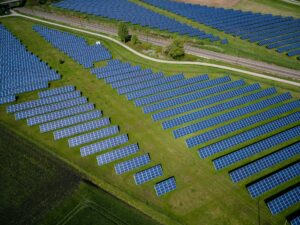 Prince Edward Island (PEI) has unveiled a comprehensive 10-year energy strategy aimed at expanding on-island renewable power generation, modernizing the electricity grid, improving affordability, and achieving net-zero greenhouse-gas emissions by 2040. The plan addresses rising electricity demand driven by population growth, electrification of heating and transport, and increased residential energy use, as well as the island’s current reliance on approximately 85% imported electricity from New Brunswick via aging submarine cables. Without additional on-island generation and storage, PEI faces a projected 27% generation shortfall by 2033.
The strategy is structured around five strategic pillars—regulatory reform, energy efficiency and demand-side management, grid modernization, clean-energy expansion, and enabling solutions such as community engagement and innovation—supported by 20 recommended actions. Key initiatives include increasing local wind and solar generation, deploying battery energy-storage systems, upgrading submarine cables, reinforcing grid resilience, and integrating distributed energy resources. The plan also emphasizes affordability and equity through a new Office of the Consumer Advocate and expanded retrofit and electrification programs. Beyond energy security, the strategy aims to foster economic development through renewable-industry job creation, community-owned projects, Indigenous partnerships, and innovation in long-duration storage and smart-grid technologies, positioning PEI for a cleaner, more self-reliant energy system by 2035. Source: The Civil Engineer
Québec 
Legault announces $4.5B wind energy project in Quebec’s Lower St. Lawrence
The Quebec government has announced a $4.5 billion investment in the Wetsok wind power project, located between Montmagny and Témiscouata in the Lower St. Lawrence region. The project, whose name means “in the direction of the wind” in the Wolastoqey language, represents a collaboration between Hydro-Québec and the Alliance de l’énergie Est, involving 209 communities and territories, including the Wolastoqiyik Wahsipekuk First Nation. Premier François Legault highlighted the initiative as part of Quebec’s strategy to develop over 10,000 megawatts of new wind power capacity in partnership with First Nations and municipalities, with goals of diversifying local revenue streams, creating jobs, and supporting communities affected by U.S. tariffs on Quebec’s forestry industry.
Grand Chief Jacques Tremblay emphasized the project as a means to ensure equitable economic benefits for his nation. While the project is expected to bring regional economic advantages, some stakeholders, including Francis Albert of the Groupement forestier de Témiscouata, caution that there is no direct link between wind energy projects and employment in the forestry sector. Parti Québécois energy critic Pascal Paradis argued that positioning the project as a substitute for forestry jobs is inappropriate, advocating instead for forest industry reform and promotion of Quebec-made materials. The government confirmed that the project will undergo social acceptability studies and local consultations to address regional realities and ensure community engagement. Source: CBC
Newfoundland and Labrador 
Pattern Energy pauses Newfoundland green H2 plan
US renewable-energy developer Pattern Energy has halted its plan to build a large-scale renewable hydrogen and green-ammonia facility in Newfoundland, shifting instead to a standalone wind-generation project. Its subsidiary, Argentia Renewable Wind LP, withdrew the original environmental assessment for the hydrogen-export project and will file a new assessment focused on developing approximately 150 MW of wind power for Newfoundland and Labrador’s electricity grid. The company described this shift as part of a “phased approach,” leaving the door open for potential future hydrogen and green-fuels development but prioritizing grid-connected wind generation in the near term.
The strategic pivot emerges amid slowing European demand for imported hydrogen and ammonia, which has contributed to delays and uncertainty across several Newfoundland power-to-hydrogen proposals. Pattern’s earlier vision—a 300 MW wind facility paired with hydrogen and ammonia production and export infrastructure at the Port of Argentia, backed by a C$1.4 billion investment and international port partnerships—has now been scaled back. The decision aligns with Newfoundland and Labrador Hydro’s current call for additional firm capacity and energy supply to the provincial grid, suggesting a stronger short-term market for wind power than for hydrogen exports. Source: Argus
Nova Scotia 
EverWind Receives Environmental Assessment Approval for the Setapuktuk Wind Project
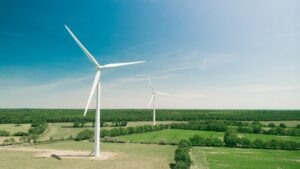 The Nova Scotia Department of Environment and Climate Change has approved EverWind’s Setapuktuk Wind Project, a 432-MW onshore wind development in the Municipality of the District of Guysborough. As the first project in EverWind’s Phase 2 renewable power buildout, Setapuktuk is designed to generate clean electricity that will power industrial-scale green hydrogen and ammonia production at the Point Tupper Green Fuels facility via the Strait Crossing Transmission Line. The project is expected to advance Nova Scotia’s clean-energy strategy by supporting large-scale renewable development, workforce transition into the green economy, and export-oriented clean-fuel production. Economic benefits include 350–400 construction jobs, 20–35 long-term operational roles, more than $3 million in annual municipal tax revenue, and $432,000 per year for community priorities through a Community Benefits Fund.
Setapuktuk is being co-developed with Membertou First Nation, ensuring meaningful Mi’kmaq participation in governance, employment, and long-term economic opportunities. The project’s name—meaning “Guysborough” in Mi’kmaw—reflects this partnership. Extensive environmental studies and multi-year engagement with local residents, Mi’kmaq communities, and municipal and provincial partners shaped the project’s development. Community and leadership statements emphasize the project’s role in economic reconciliation, rural economic growth, and long-term stability for local families through new career opportunities and contracting work. With 54 turbines located across several Guysborough-area communities, the Setapuktuk Wind Project represents a significant step toward Nova Scotia’s clean-energy transition and regional economic development. Nation Talk
Nunavut 
The Iqaluit Nukkiksautiit Project is transformative for Nunavut
The federal government’s decision to fast-track the Iqaluit Nukkiksautiit Project through the Major Projects Office designates the 15–30 MW hydro development as a project of national significance. Led by the Nunavut Nukkiksautiit Corporation (NNC), the project is positioned to fundamentally transform Nunavut’s energy system, which is currently almost entirely dependent on imported diesel. Once operational, it is expected to replace nearly 15 million litres of diesel annually, reduce over $60 million in diesel subsidies, lower energy costs for consumers, and modernize aging infrastructure. The project represents the largest renewable energy initiative ever undertaken in Nunavut and is anticipated to deliver far-reaching benefits: reduced environmental risk, increased energy reliability, job creation, economic growth, and strengthened northern climate and sovereignty objectives.
Local Indigenous leadership is central to the project’s long-term success. NNC’s deep community roots, sustained engagement, and leadership in energy policy and development have laid the groundwork for diesel reduction and greater energy sovereignty in the territory. Their involvement highlights the importance of community-driven approaches in remote regions, where local capacity and decision-making are essential for operational reliability and infrastructure stewardship. The piece concludes by underscoring the need for continued federal support for Indigenous-led clean-energy programs—such as the Indigenous Off-Diesel Initiative and Clean Energy for Rural and Remote Communities—warning that uncertainty around these programs risks slowing progress. The Iqaluit Nukkiksautiit Project is presented as a model for how strong policy, sustained investment, and Indigenous leadership can drive transformative, generational clean-energy infrastructure in the North. Source: Pembina Institute
Northwest Territories 
Minister Caroline Wawzonek on the next list of federal Projects of National Interest
In a formal statement, NWT Minister of Strategic Infrastructure, Energy and Supply Chains Caroline Wawzonek responded to the federal government’s latest update to its Projects of National Interest list. While no Northwest Territories projects were included in this tranche, Wawzonek emphasized that Arctic energy and northern infrastructure remain central to Canada’s strategic priorities. She highlighted the Arctic Economic and Security Corridor, already recognized by the Prime Minister as a national-interest project, and underscored the continued momentum behind three major NWT initiatives: the Mackenzie Valley Highway, the Arctic Economic and Security Corridor, and the Taltson Hydro Expansion and interconnection. According to the minister, these projects are advancing through planning, engineering, financing, and regulatory steps regardless of whether they appear in any given federal announcement.
Wawzonek also welcomed several new Arctic-focused investments from Budget 2025, including the Arctic Infrastructure Fund, the Trade Diversification Corridors Fund, and expanded financial tools through the Canada Infrastructure Bank, all of which create opportunities to advance NWT’s clean-energy and infrastructure initiatives. She noted that the federal commitment of $67 million to strengthen northern regulatory and consultation capacity is essential to ensuring Indigenous governments can participate fully and processes remain timely and effective. The minister stressed that successful development depends on consistent federal partnership, meaningful Indigenous involvement, and access to financing—not simply being named on a federal list. She concluded that clean energy, all-season roads, and Arctic corridors are vital to Canada’s long-term sovereignty, security, and prosperity, and reaffirmed that the territory will continue pressing forward with its nation-building projects while maintaining close engagement with federal counterparts. Source: Government of Northwest Territories
Yukon 
Federal government invests in natural infrastructure enhancements in the Yukon
The federal government is investing over $1.8 million in the Yukon to enhance flood mitigation and create greener community spaces in Teslin and Dawson City. In Teslin, approximately 450 metres of shoreline along Teslin Lake will be restored using rip-rap, armouring rocks, and native plantings to reduce erosion and flood risk, while also creating a leveled walking path with public access and educational signage. In Dawson City, the Tr’ondëk Hwëch’in farm will benefit from a 340‑metre berm and strategically planted berry crops and perennials to manage runoff, protect farmland, and improve food security. Additionally, Dawson will establish a natural greenspace adjacent to the local hospital and long-term care facility, featuring healing gardens, traditional medicines, perennial and annual Hügelkultur gardens, signage, walkways, and seating to enhance community well-being and support Indigenous cultural practices.
The projects are funded through Housing, Infrastructure and Communities Canada via the Natural Infrastructure Fund and the Climate Change Preparedness in the North Program, with Indigenous-led initiatives prioritized for at least 10% of funding. These initiatives exemplify the use of natural and hybrid infrastructure to strengthen community resilience against climate change, mitigate flood risks, and integrate culturally significant and food-producing landscapes. Local leaders and officials highlighted the projects’ roles in fostering environmental stewardship, food sovereignty, culturally informed care, and collaborative governance between Indigenous communities, municipalities, and federal programs. Source: Government of Canada