

Alberta 
Alberta carbon storage project moves into construction following engineering milestone
 The Origins Carbon Capture and Storage (CCS) Hub near Clive, Alberta, has reached a major development milestone, with Calgary-based Gas Liquids Engineering Ltd. (GLE) completing detailed engineering work and construction now underway. The project, developed by Enhance Energy Inc., will connect existing carbon dioxide transportation infrastructure to a new underground storage facility. GLE’s engineering work included pipeline design, mechanical and process systems, structural engineering, electrical systems, safety measures and pipeline integrity. The project is expected to begin operations in early 2027 and represents another step in expanding Alberta’s carbon capture and storage network. The facility will transport captured carbon dioxide and inject it into underground geological formations for long-term storage, helping reduce industrial emissions. Although the announcement did not disclose the project’s total cost, pipeline length or annual storage capacity, its progression into construction highlights continued investment in Alberta’s carbon management infrastructure.
Source: West Central Online
Electricity Prices for Alberta
The Alberta power pool price averaged 5.133 cents per kWh in October 2026. This price is 2.193 cents higher than last month’s average of 2.940 cents. The pool price has averaged 3.649 cents per kWh over the last 12 months.
As of November 1, 2026, the forward market was predicting electricity prices for the calendar years of 2026, 2027, 2028, 2029, 2030, and 2031. These prices are 4.213, 4.506, 6.219, 8.075, 8.900, and 9.250 cents per kWh, respectively.
Gas Prices for Alberta
Direct Energy’s gas rate for October 2026 was $1.458 per GJ in Alberta. The November 2026 rate has been set at $1.893 per GJ. Alberta gas prices have averaged $1.968 per GJ over the last 12 months.
As of November 1, 2026, the forward market was predicting gas prices for the calendar years of 2026, 2027, 2028, 2029, and 2030. These prices are 1.79, 1.84, 2.20, 2.43, and 2.51 cents per GJ, respectively.
British Columbia 
BCUC accepts BC Hydro’s 20-year plan: The real test of B.C.’s clean energy transition starts now
The British Columbia Utilities Commission (BCUC) accepted BC Hydro’s 2025 Integrated Resource Plan on October 27, 2026, establishing a framework for meeting the province’s growing electricity needs. The plan includes expanding renewable energy, particularly wind power, adding a sixth generating unit at Revelstoke to provide approximately 500 MW of additional capacity, upgrading transmission infrastructure and exploring battery storage, geothermal and pumped hydro. It also emphasizes energy conservation, with BC Hydro’s Power Smart 2.0 targeting annual electricity savings of 2,200 GWh and peak-demand reductions of 800 MW by 2030. These investments are intended to support electrification, economic development and the transition to cleaner energy. However, there are concerns about electricity affordability, grid readiness and who ultimately pays for expanding infrastructure. Industrial customers, including LNG facilities and energy-intensive data centres, should bear a fair share of infrastructure costs rather than placing an unfair burden on residential ratepayers. There are calls for greater public transparency, climate resilience, equitable access to renewable energy such as rooftop and community solar, and stronger support for energy conservation. Ultimately, the regulatory acceptance is only the beginning: the success of B.C.’s electricity strategy will depend on whether provincial and municipal leaders ensure that new electricity supplies accelerate decarbonization, protect consumers and deliver fair benefits to communities.
Source: City Hall Watch
Ontario 
Ontario environment minister hopes to burn more garbage, build more landfills
 Ontario is considering expanding landfill capacity and increasing the use of waste-to-energy incinerators as the province faces a growing garbage disposal crisis. Environment Minister Todd McCarthy warned that existing landfills could reach capacity within 10 years, or potentially five years if U.S. President Donald Trump’s new 50 per cent tariff on Canadian waste remains in place. The provincial government’s proposed Building Ontario Faster Act aims to speed up approvals for new landfills and incinerators, with the government encouraging municipalities to volunteer as host communities in exchange for potential economic benefits.
However, proposed legislative changes would remove an existing requirement for municipal support when approving landfill sites, raising concerns about whether communities could ultimately be overruled. The proposal has drawn criticism from opposition politicians and environmental advocates, who warn that waste incineration can produce toxic air emissions and hazardous ash that still requires landfill disposal. Critics argue that Ontario should prioritize waste reduction, recycling and improvements to its blue box program rather than expanding garbage disposal infrastructure. McCarthy points to existing waste-to-energy facilities in Brampton and Clarington as examples of successful projects, arguing they can generate clean energy while addressing limited landfill capacity. Ultimately, the debate centres on how Ontario will manage its growing waste volumes while balancing environmental protection, municipal consent, energy generation and the economic implications of U.S. trade tariffs.
Source: Sudbury.com
Saskatchewan 
Saskatchewan Calls for Greater Access to Global Energy Markets and the End to the Tanker Ban
The Government of Saskatchewan supports ending the federal tanker ban on British Columbia’s north coast to expand export opportunities for Western Canadian oil and strengthen the Canadian economy. The province also supports Bill C-264, introduced by the Conservative Party of Canada, and encourages federal parties to work together to pass the legislation. Premier Scott Moe and Energy and Resources Minister Chris Beaudry argue that removing the ban would improve access to global markets, particularly in Asia, reduce shipping costs, attract investment, create jobs, and help narrow the price discount on Western Canadian Select oil. Saskatchewan believes that expanding export capacity would diversify Canada’s trade opportunities, increase government revenues for essential services such as healthcare and education, and strengthen Canada’s position as a reliable global energy supplier. The province also argues that decisions about marine transportation should be based on evidence and Canada’s marine safety regulations rather than blanket restrictions.
Source: Saskatchewan Government
Manitoba 
Call for power: Indigenous majority-owned wind
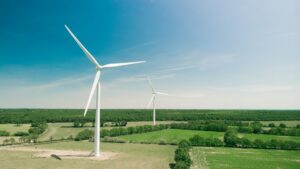 Manitoba is launching a procurement initiative under its Affordable Energy Plan to secure up to 600 megawatts (MW) of new wind power from Indigenous majority-owned wind projects in southern Manitoba. The initiative responds to growing electricity demand, which is projected to more than double over the next 20 years, while supporting Indigenous economic development, increasing the province’s energy supply, and advancing its Indigenous Relations Commitment. Individual wind farms may generate up to 200 MW, with Manitoba purchasing the electricity produced through power purchase agreements. The procurement process began with a Request for Qualified Suppliers issued in October 2025, followed by the first Request for Proposals in March 2026. Eleven proponents have signed framework agreements and are now eligible to submit proposals. Manitoba plans to offer additional opportunities for new suppliers to qualify at least annually and expects to issue multiple rounds of proposals. To qualify, each wind project must be majority-owned by one or more Indigenous Nations in Manitoba and connect to the provincial electricity grid within 20 kilometres of one of 14 designated existing substations.
Source: Manitoba Hydro
New Brunswick 
Government welcomes energy investment
The New Brunswick government has announced $269 million in investments to strengthen the province’s electricity system, improve grid reliability and support clean energy development. The funding will support two major projects: the modernization of the Mactaquac Generating Station and upgrades to the Salisbury Terminal transmission substation. Of the total investment, $219 million from the Canada Infrastructure Bank will support planning, technical studies, regulatory reviews, First Nations engagement and site development for the Mactaquac Life Achievement Project, which aims to extend the hydroelectric station’s operating life to approximately 2068. The remaining $50 million from Natural Resources Canada will fund upgrades to aging equipment at the Salisbury Terminal, improving electricity transmission and grid reliability. Together, these investments aim to strengthen New Brunswick’s energy security, meet growing electricity demands and ensure a reliable, affordable and sustainable electricity supply for the future.
Source: Government of New Brunswick
Prince Edward Island 
Summerside won’t have battery storage for its solar power this winter after Sunbank fire
Summerside, P.E.I., is facing a more challenging winter after a fire at its Sunbank solar farm destroyed a lithium-ion battery that had been used to store renewable energy. The battery fire, which began in September and burned for two weeks, has left the city without five megawatts of dispatchable power for the winter and potentially several years. Although Summerside generates about 60 percent of its electricity from renewable sources, the loss of battery storage increases its reliance on electricity from New Brunswick through Maritime Electric’s transmission system. A new temporary agreement with Maritime Electric should improve the city’s access to power compared with last winter, but officials still expect to rely heavily on the city’s 15-megawatt backup generators to meet demand. Despite the setback, city officials remain committed to battery storage as part of Summerside’s long-term energy strategy. The city must complete a significant remediation process before determining the next steps for the damaged solar farm, while also considering a subsea cable connection to the mainland to improve energy independence. Energy expert Jeff Dahn emphasized that battery storage is essential for communities that depend heavily on solar and wind power because it allows excess energy to be saved for periods when renewable generation is unavailable. He also noted that battery fires are rare and that safety technology continues to improve.
Source: CBC
Québec 
Elysis: Carbon-free aluminum
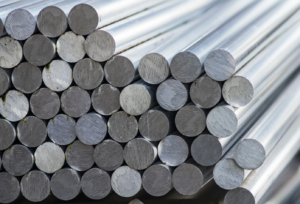 There has been a major breakthrough in reducing emissions from aluminum production, which accounts for approximately 3% of global industrial carbon dioxide emissions. In Quebec, aluminum producers Alcoa and Rio Tinto have begun operating the first commercial-scale carbon-free aluminum plant using Elysis technology. This innovation replaces traditional carbon anodes used in aluminum smelting with a proprietary material, eliminating direct greenhouse gas emissions from the smelting process while improving production efficiency. The development could significantly reduce the environmental impact of aluminum manufacturing, an important material used across many industries. Elysis-produced aluminum is already being incorporated into products such as Apple MacBook Pros and iPhones, BMW and Audi vehicles, Corona beer cans, and aerosol cans manufactured by companies including Ball, Unilever, and Alcoa
Source: Time
Newfoundland and Labrador 
Province to blow past climate targets, internal government documents reveal
Newfoundland and Labrador is projected to significantly miss its climate targets for 2030 and 2040, putting its goal of achieving net-zero greenhouse gas emissions by 2050 at risk. Internal government documents from July 2026 forecast emissions of 9.2 megatonnes in 2030, well above the province’s target of 7.2 megatonnes. The projections have sparked criticism from NDP climate critic Sheilagh O’Leary, who blames successive PC and Liberal governments for failing to take sufficient climate action. Although the government describes the figures as preliminary, it is preparing a new climate strategy and public consultation process under Premier Tony Wakeham. Concerns were also raised that the PC government’s support for expanding the oil and gas industry could undermine meaningful emissions reductions. While the Liberals are calling for greater transparency about the projections and a clear plan to meet long-term targets, the government is reportedly considering changes to industrial carbon pricing to reduce the impact on businesses while maintaining federal compliance. Concerns are growing about the gap between Newfoundland and Labrador’s climate commitments and its projected emissions, as well as the political and economic challenges involved in achieving net-zero by 2050.
Source: The Independent
Nova Scotia 
Feds invest $100M to advance Nova Scotia’s offshore wind industry
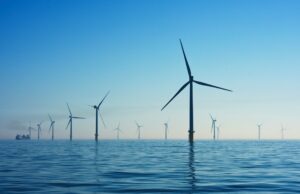 The Government of Canada has committed $100 million to support offshore wind development in Nova Scotia as part of its broader Atlantic Energy Strategy. A major focus is the Wind West project, which aims to generate enough clean electricity to power all of Nova Scotia while exporting additional energy to other parts of Canada. Of the funding, $5 million will support floating LiDAR-equipped buoys to collect data on offshore wind speeds and ocean conditions, helping developers assess potential sites ahead of Nova Scotia’s first offshore wind Call for Bids, expected in winter 2027. An additional $3 million will support research into transmitting offshore wind electricity from Nova Scotia to Quebec, Ontario and beyond. The investment is expected to strengthen Atlantic Canada’s energy security, attract private investment, create thousands of jobs and establish a domestic offshore wind supply chain. Marine Renewables Canada welcomed the announcement, highlighting opportunities for Canadian businesses specializing in marine surveying, engineering, ocean technology and environmental services. With Nova Scotia potentially offering licences for up to five gigawatts of offshore wind capacity, the initiative could position Canada as a major competitor in the growing global offshore wind industry while making clean electricity an important future export.
Source: Environmental Journal
Nunavut 
International Day of Climate Action: 6 ways you can become a climate change champion in your community
Climate change is affecting Nunavut’s land, wildlife and communities through rising temperatures, melting ice and changing ecosystems. In recognition of International Day of Climate Action on October 24, the Nunavut Climate Change Secretariat is promoting the Joshua Ipeelie Komangapik Climate Change Champion Toolkit, a free resource that encourages Nunavummiut to take action and help their communities understand and respond to climate change. A climate change champion is anyone who shares knowledge, raises awareness and supports efforts to reduce emissions and prepare for environmental changes. There are six ways individuals can become climate change champions: educate themselves by learning from research and Inuit Elders and knowledge holders; raise awareness by sharing information and starting conversations; lead by example through sustainable everyday choices; get involved in community projects and environmental events; support local initiatives such as renewable energy and waste reduction programs; and build partnerships with youth, Elders, educators and organizations. Overall, everyone can contribute to climate action, and even small individual efforts can make a meaningful difference when communities work together.
Source: Nunavut Climate Change Secretariat
Northwest Territories 
‘There comes a point where unexpected isn’t unexpected any more’
The Northwest Territories government is facing approximately $100 million in unexpected expenses this financial year due to worsening climate-related challenges. This includes an additional $61 million for wildfire suppression, nearly doubling the original forest management budget, and $34 million to help the NWT Power Corporation manage rising fuel costs and unusually low water levels that have reduced hydroelectric power generation. Rather than passing these costs directly on to electricity customers through higher rates, the territorial government is covering the additional expenses. Finance Minister Caroline Wawzonek acknowledged that water levels have dropped much sooner than historical patterns would suggest, with recent inflows reaching some of the lowest levels recorded in 40 years. MLAs are questioning whether these expenses should still be considered unexpected, arguing that wildfires and low water levels are becoming recurring consequences of climate change and should be reflected in future budgets. The government is exploring longer-term solutions, including connecting the Taltson hydroelectric system to the North Slave region, developing smaller hydro projects, expanding renewable energy and battery storage, and upgrading existing power facilities. However, with another low-water winter expected and declining revenues from mining and oil, the NWT faces growing financial pressure as it tries to prepare for ongoing climate impacts while funding other essential services.
Source: Cabin Radio
Yukon 
New program to grow the Yukon’s forestry and bioenergy sector
 The Government of Canada is investing up to $546,945 over three years in the Yukon Wood Products Association (YWPA) to strengthen the territory’s forestry and bioenergy sector. Announced by Minister Rebecca Chartrand at the 2026 Yukon Forestry & Bioenergy Conference, the funding will support Yukon forestry businesses and First Nations by improving access to timber, strengthening regulatory readiness, modernizing business operations, and expanding local biomass opportunities. The investment is delivered through CanNor’s IDEANorth program to support economic diversification, local employment, and sustainable industry growth. A key component of the initiative is the new Leadership, Education and Advancement in Forestry (LEAF) program, which will provide training, technical assistance, and industry-wide learning opportunities. Support will include developing timber harvesting plans, improving forest management and regulatory planning, advancing bioenergy opportunities, and developing new markets for Yukon wood products. Overall, the three-year project aims to build local capacity, strengthen partnerships with First Nations and communities, and help move forestry and bioenergy projects from planning to implementation, creating a more resilient Yukon economy.
Source: Government of Canada